Celebrating 300 Years of Capability Brown
click on the image below
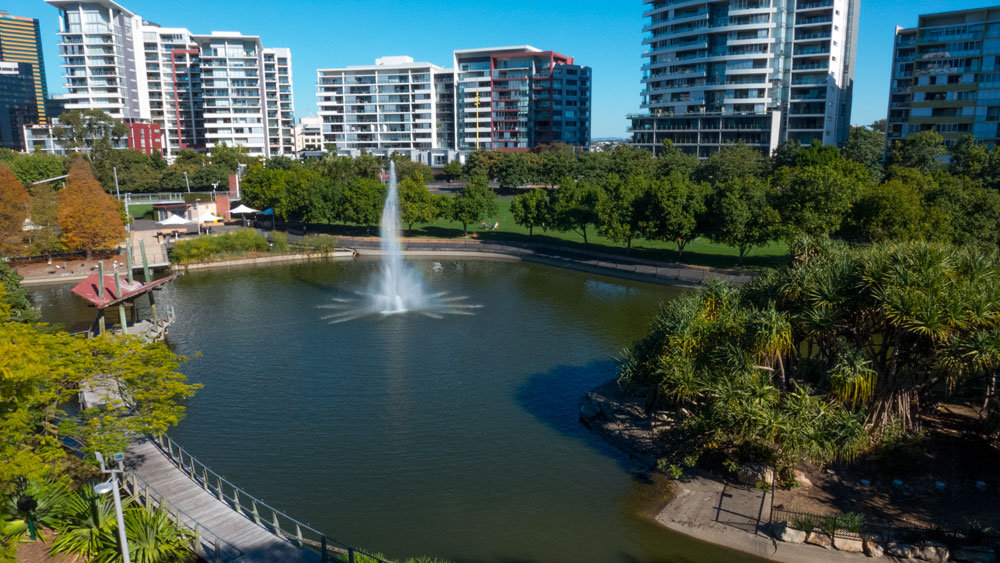
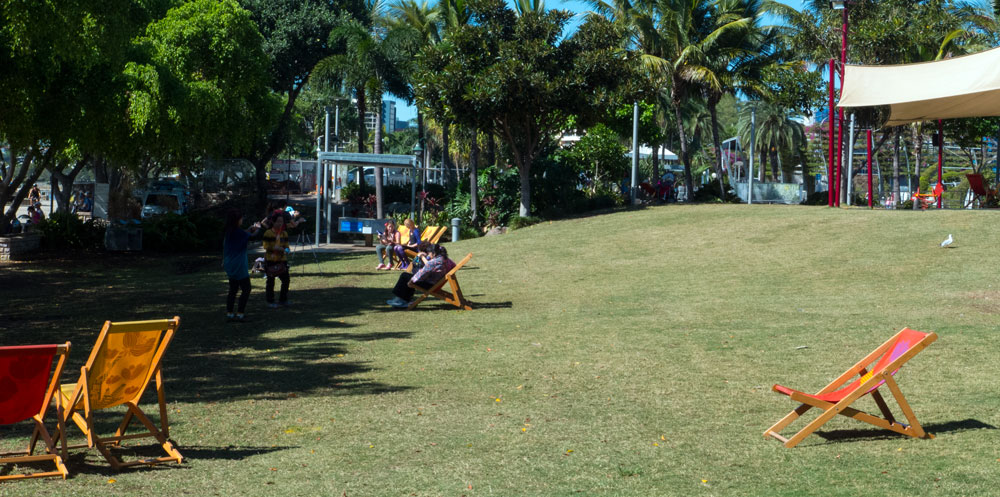
The Queensland state government spent millions on the Roma Street Parklands. This parkland was set to add huge value to any apartments built around its edges. One would have thought that the City would have insisted on at least some higher levels of design for such buildings. Continue reading Roma Street Parkland, Brisbane, Part Two
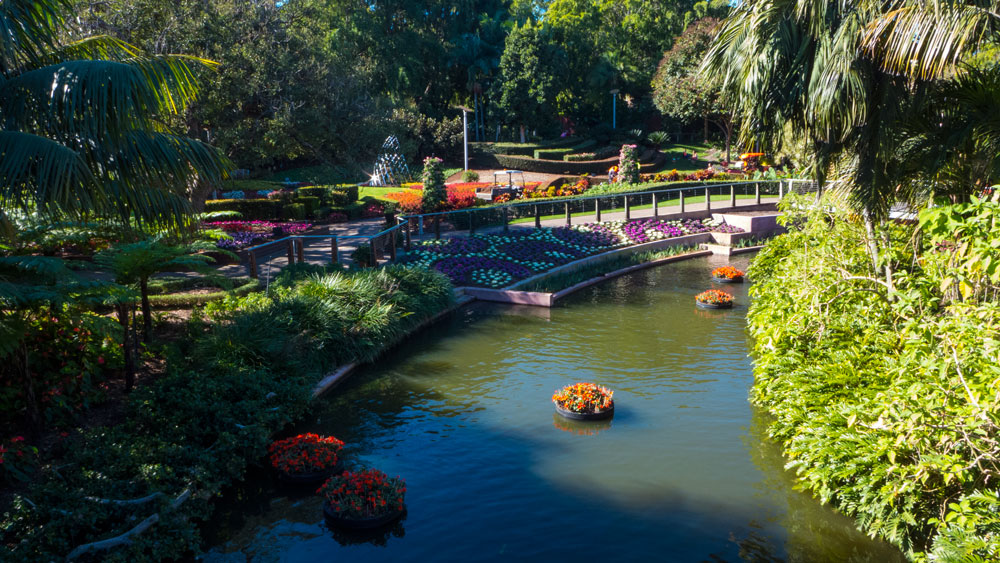
I first visited these gardens and parklands back in 2004 and was very impressed then. This parkland project was a major commitment by the then state government to re-develop a former industrial site and to join it to the existing Albert Park to form one larger parkland, the Roma Street Parklands. I highly recommend anyone and everyone visiting Brisbane to allocate at least an hour to wander about these parklands ten minutes or more away from the Brisbane CBD. (click on any image to enlarge it)
I am not sure why, but I persisted to watch Homeland despite enough warnings in season two that the writers had lost the plot.
I start these comments with my recommendation so I can avoid providing spoilers for those who have not watched the third season of this TV series.
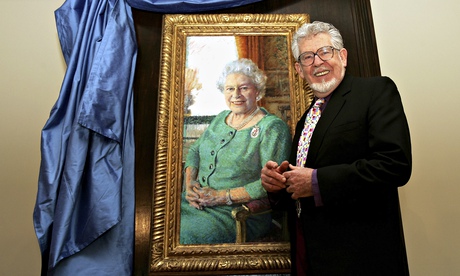
The debate over what different people, institutions and township are doing with their formerly treasured artworks by Rolf Harris has been sad to watch. This style of artwork was always more of a populist marketing campaign. His art was and remains simplistic and very ordinary at best.
I was a little shocked when he was commissioned to paint a portrait of the Queen. Continue reading Unloved Art
Our public galleries have wonderful collections. Collection exhibitions are often overlooked by the public as the marketing foolishly concentrates on the block busters and special exhibitions. This is a shame as the collection exhibitions are wonderful.
I welcomed the opportunity to visit Harvest: Art, Film + Food. To see this mix of art was indeed a welcomed experience. Continue reading Harvest at GOMA
France takes a stand against the giant Amazon in an effort to safeguard its own culture of having viable bookstores. Good news for the French. Hope other are watching. Again, it may be time to shop anywhere but at Amazon. Click here.
———————————
Paul Costigan, 29 June 2014
The centre of Melbourne has a tremendous network of laneways. Many are well established as alternate routes to the main streets. Many of the laneways have cafes, and in more recent years, many have become havens for all manner of street art.

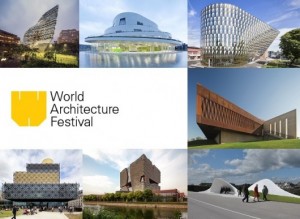
The 2014 World Architecture Festival Awards shortlisted projects have been listed online. It makes for an interesting read.
I have provided two links below. One with categories only – which means you have click-through to see more. The other is the full list. A number of Australian projects have been listed, including The National Botanic Gardens – these I have reviewed (click here) , so I will say no more.
It has been a long puzzle of mine as to just what makes an architecture project an award-winning project. I know that it cannot be just who sits on the award jury and who knows who, so it must be something else.
Guest Relations at Jan Manton Art
I had a chance last week to see Guest Relations, the exhibition of Robyn Stacey in Brisbane. As I had pointed out in my earlier review, it is a show not to be missed.
Click here for my former post.
Click here for words in Art Almanac
Click here for Jan Manton Art.
Click here for Stills Gallery, Sydney.
——————————————-
Paul Costigan, 6 July 2014
This book about housing in Canberra is welcomed by those amongst us who would love to see more good design in the provision of houses in Canberra. Much of Canberra, as with most places internationally, is presently being devastated with loads of new badly designed suburbs as well as very awful blocks of cheaply rendered apartments being foisted on the older inner suburbs. The authors of this book are to be congratulated for illustrating that the architecture for residential properties can be something to be enjoyed.
I picked up this book quiet a while ago but it is only now that I have had time to look through it. I am glad I did, as after reading through quite a bit of it, I have become more aware that Canberra has a reasonable amount of good and notable architecture.
I have a quiet interest in good architecture and have spent some energies complaining about the current crop of badly designed houses and commercial buildings being thrust onto Canberra. Residents have despaired that good design in our civic areas and suburbs has become a thing of the past.
A good news story from the Art Newspaper about paintings that were destined to shunted off the scene as they were obvious fakes. After some work by clever conservationists, some secrets were revealed and the paintings are in fact highly prized treasures. To featured in an exhibition: Faked, Forgotten, Found.
A good news art story. click here.
——————————————-
Paul Costigan, 29 June 2014
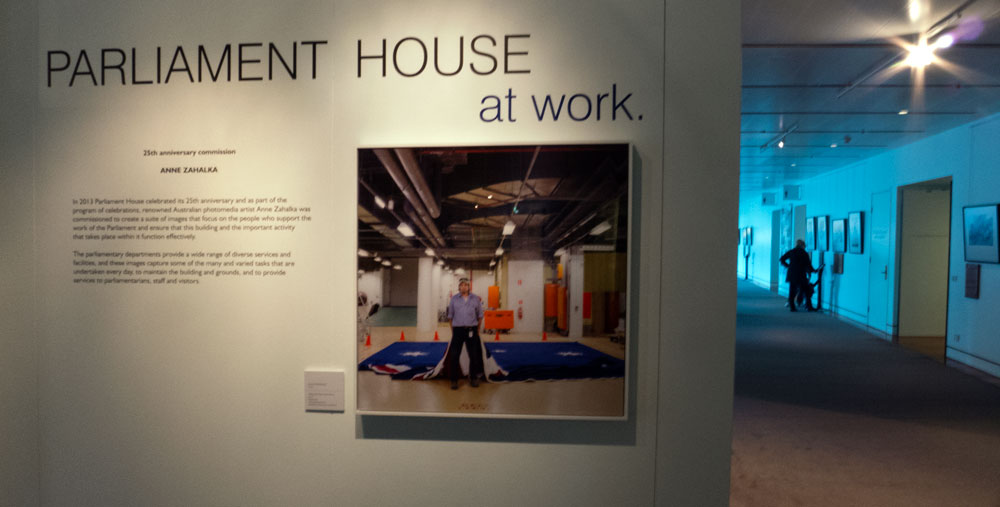
On Exhibit at Parliament House in Canberra are the commissioned photographs by Anna Zahalka (click here). The photographs are of the staff who are normally behind the scenes and whose work is vital to so many operations within the building.
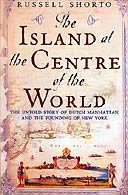
Surely the citizens of the USA would have by now have worked out the history about their first colonists.
They probably thought so until the research behind this book surfaced and now they can read about the real history from this author, Russell Shorto.
This book is the precursor to Russell Shorto’s later book, Amsterdam, reviewed earlier – click here. Both are fascinating reads.
Continue reading Manhattan: The Island at the Centre of the World
Dealing with contemporary planning agencies has become a very stressful task for any person with concerns for their immediate and future urban environments.
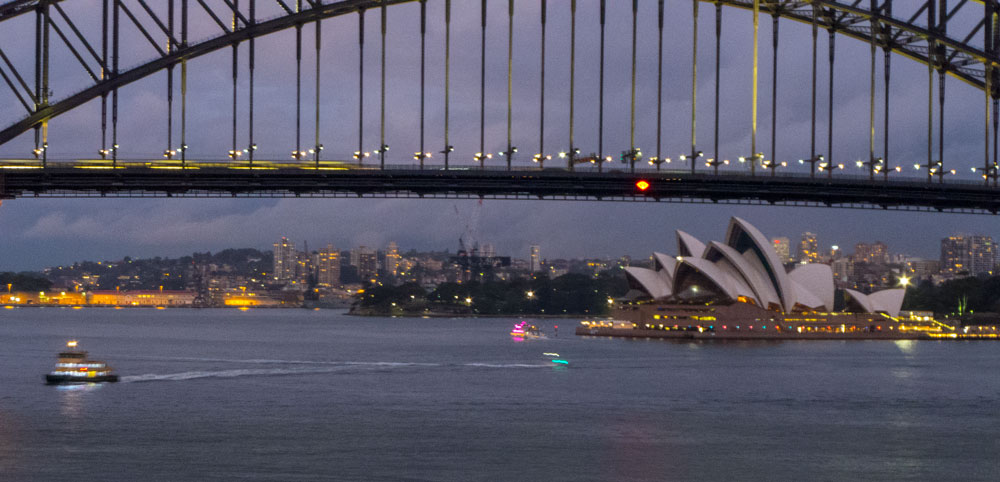
There is no doubt that the City of Sydney and its harbour are magnificent to behold. (click on the photo to enlarge). The mix of built structures really makes for a view that demands you take the time to stare, contemplate and to just enjoy it for as long as it takes. However…..
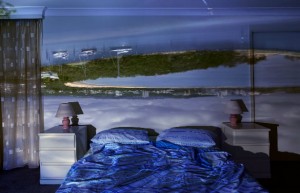
I have stayed in many hotel rooms in many cities and towns. The experience of being in a hotel room, although now it is mostly apartments, is usually enjoyable but always with a tinge of weird. You enter this borrowed space and establish your presence while always being aware of the temporary nature of your stay.
We live in a street that is inhabited by many dogs. Nearly every neighbour, near and far, has a pooch.
Most of these animals are quiet. Full credit to their owners. But we have the honour of having a couple that do let their presence be known with some barking. I have posted before about not so nice dogs and their owners. (click here) Continue reading Our Dog Shakey
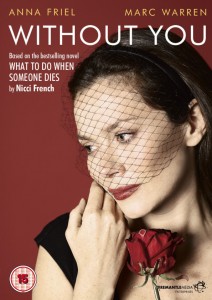
This three-part mini series was viewed in one sitting on a cold and wet Saturday evening.
The story’s focus is how a married woman copes with the sudden death of her husband of 12 years. To that add that she quickly has doubts about the car accident. She has to also deal with the doubts and stories about whether he was being unfaithful.
At the seminar at the National Gallery of Australia, the Indonesian artist FX Harsono made a presentation as an Indonesian of Chinese decent who is now researching and making art about the treatment of the Chinese communities in the early days of the Indonesian republic.
There’s a fantastic video on exhibition in which FX Harsono deals with his Chinese name, in that he is writing it continuously while other forces are washing it away.

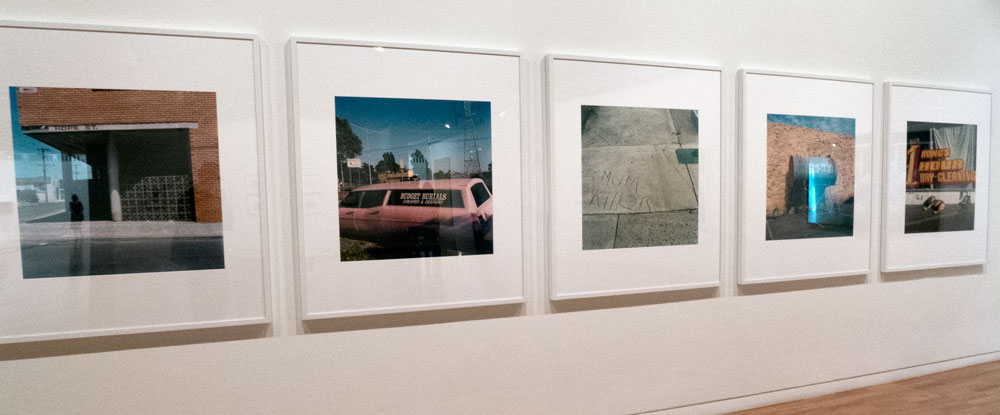
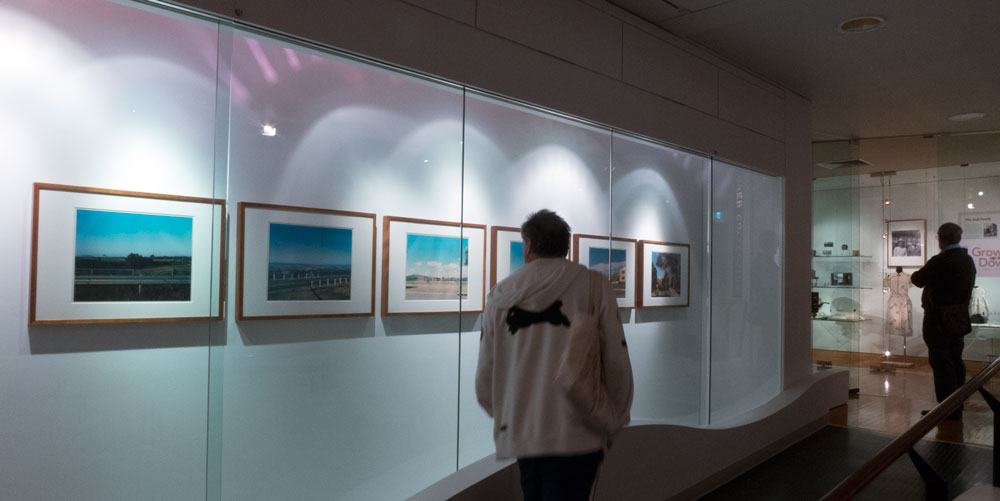
It was while visiting the Canberra Gallery for another exhibition that we spotted these six works by the artist/photographer Ian North. On exhibition were colour photographs from Ian’s suite of 24 images, the Canberra Suite Series (1981).
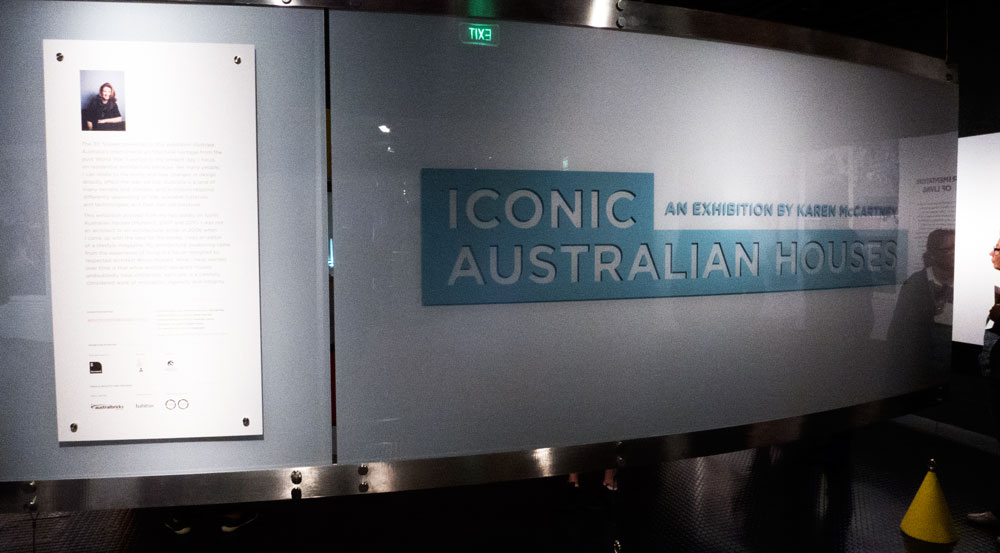
Over the years I have ventured into many exhibitions on Australian architecture. Most have been so badly put together that to call them boring is an understatement. This is not to say that the architecture is the problem, it is clearly that bodies such as the Institute of Architects know how to talk themselves but have little idea of how to market to the wider general public.
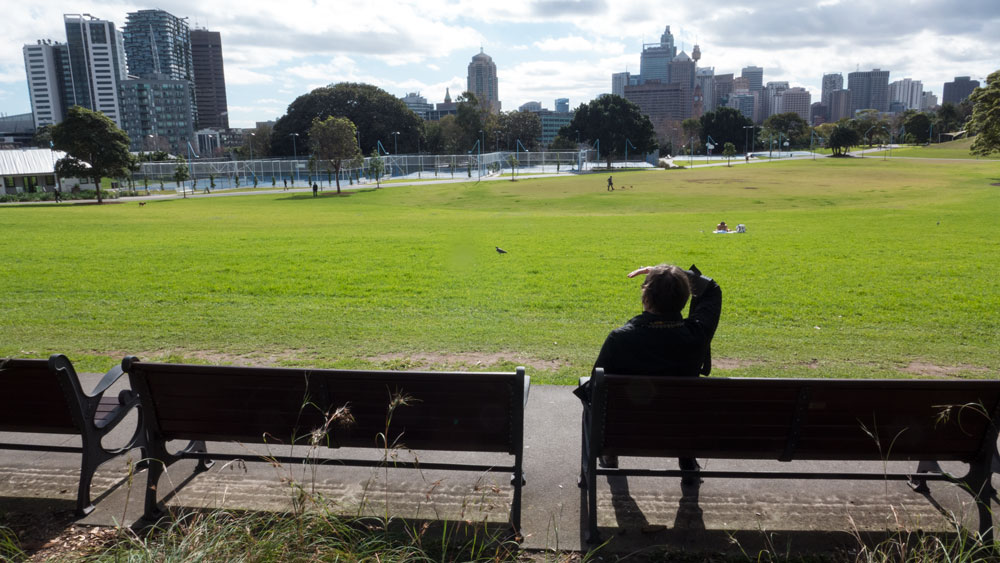
It should always be celebrated when a city council looks after its city parks. The property and development lobbies of this world see these public spaces as potential for profit-making development sites and would be always on hand to lobby for any reduction such public open spaces. Prince Alfred Park in Surrey Hills in Sydney has just benefited from a wise city council that has invested in some upgrades on this fabulous inner city parkland.
Several months back there was an article by Christopher Vernon, of the University of Western Australia, putting forward the background and argument for a permanent memorial in Canberra for Walter Burley Griffin and Marion Mahony Griffin. Click here for that article.
There are various things scattered around Canberra that tell their story.
Continue reading Walter Burley Griffin and Marion Mahony Griffin
National Gallery of Australia
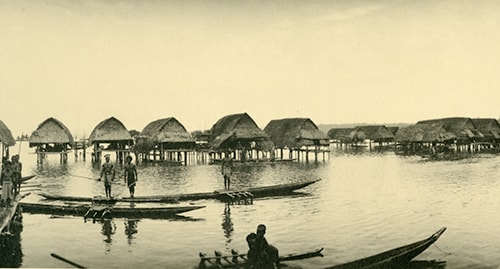
Garden of the East: photography in Indonesia 1850s–1940s

21 February – 22 June 2014, free entry to exhibition (note the exhibition is on two floors)
Continue reading Garden of the East: photography in Indonesia
One of the unfortunate outcomes of the marketing of our major art galleries is that so much emphasis has been placed on the special and blockbuster exhibitions. This form of marketing may be assisting with budgets, but this success is at the cost of letting people know about the galleries’ own collection exhibitions.
There’s a good book review uploaded to the online site Inside Story. The book is The Inside Story of Climate Politics Under Rudd and Gillard.
Andrew Dodd provides a thorough overview of Philip Chubb’s insider account of the demise of Kevin Rudd’s climate scheme.
His review males the book to be essential reading. My stack of books is already too high so I have provided this review as a way of tempting others. Click here.
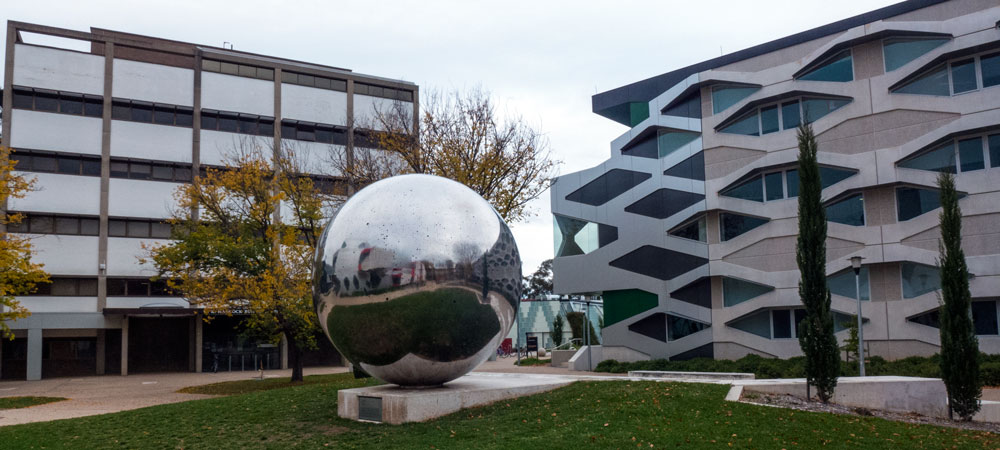
Across Australia there are stand out examples of campus design amongst many of our universities. In more recent years I have had reason to visit campuses in all the states and back here in Canberra and have been constantly impressed with some of the architectural and landscape work. In most cases I have been positively impressed with the work and in others I have been taken aback.
In 2014, contemporary car design is fairly mundane. Most car designers are pumping out things that are not attractive. Cars today seem to be suffering from either a lack of design or have a combination of tricky features pretending to be some form of design. So many cars today are simply very boring.

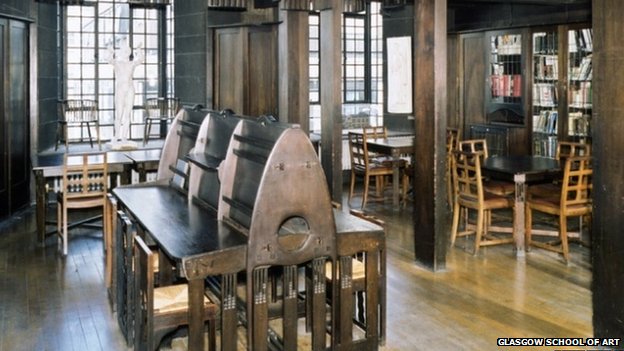
The iconic library at Glasgow School of Art has been lost in the fire which swept through the Charles Rennie Mackintosh building on Friday. click here
And an interesting piece from a researcher – click here.
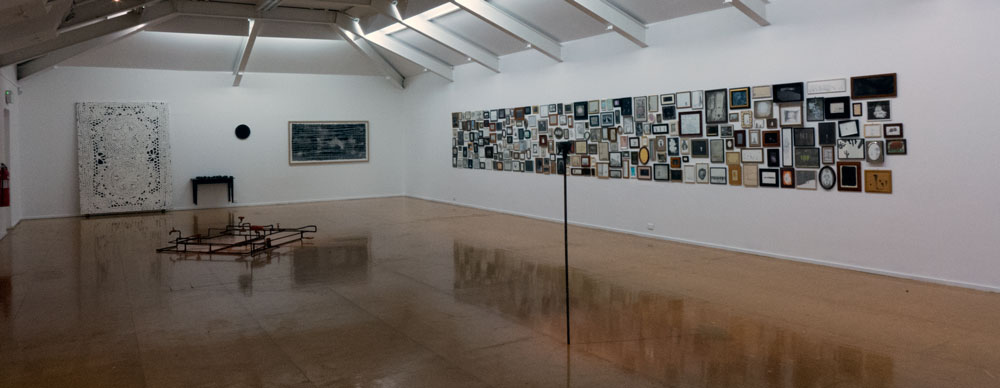
Once upon time Canberra had heaps visual arts galleries to visit on weekends. Now there are but a few left. Last weekend I visited two publicly funded visual art spaces; being the M16 Gallery in Griffith and the Canberra Contemporary Art Space (CCAS) in Braddon. I can happily report that things are looking good and suggest you get out there and see for yourself just how both of these are traveling.*
This exhibition of the photography of Sue Ford (1943 – 2009) at the Victorian State Gallery (National Gallery of Victoria*) is a curious one. Click here – for their media statements.
As an opening statement I have to say that I did not find this exhibition as satisfactory as I had anticipated. Parts of the exhibition worked reasonably well, whereas other sections look as if someone was not sure what to do with the work, or that maybe they did not understand Sue Ford’s work.
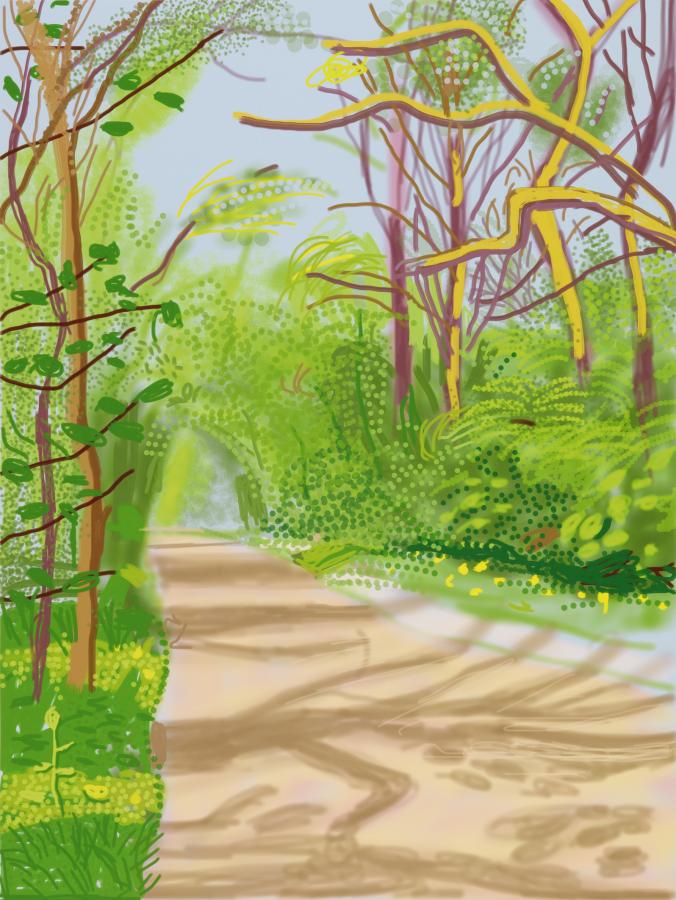
I have been a follower of David Hockney’s work from the early 1980’s, when I first read a book on his early UK works. Since then I have followed his merry career as he has switched medium and taken on a range of subjects.
In general I like most of his work and remain intrigued by lots of the other. It was with interest that I spotted this London exhibition, all done on the iPad, listed online. Have a look and open up the images in large format. There is definitely something interesting going on here. Hope one day to get to London again to see some of these.
Click here for the exhibition notice and then click ‘full screen’ for the slide show.
Photographer, Fabrice Fouillet, has a series of images of Colosses that were created to dominate and dwarf the landscape and buildings around them.

This year, Russ & Daughters, the acclaimed appetizing institution on the Lower East Side, turns a hundred years old. To celebrate the occasion, the fourth-generation co-owners are giving customers a place to sit.
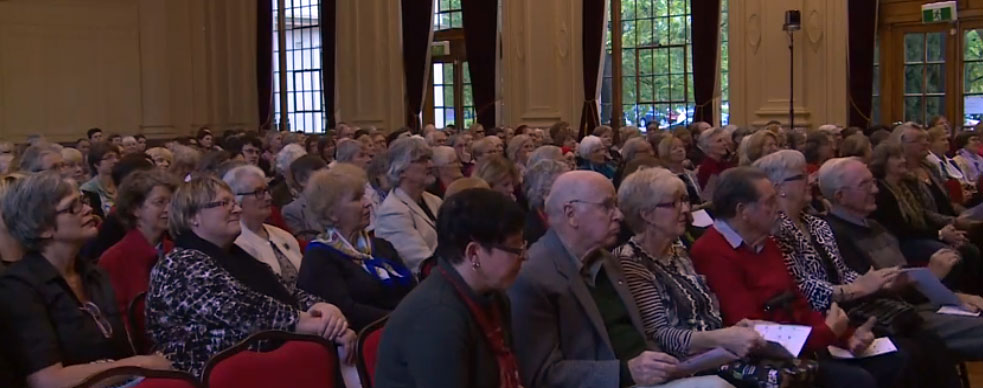
Held in the Albert Hall, Canberra, on 26 March 2014.
The proposition was that ‘Australia doesn’t need Women’s History Month’. Continue reading Australian Women’s History Forum
I have just come back from Brisbane and had the wonderful experience of seeing more photographs by Anna Carey. I have mentioned her work previously — click here for that post.
Do you want to see something really really scary?
The Monthly has published an excellent article of the Abbott crowd and how his old boys are in charge. The image on the cover is worrying simply because it is so factual. The artist has captured their collective personalities far too accurately.
Do not show this image to children. Click here.
That parts of Brisbane are ugly and the local government has allowed this to happen
Part Six of Six – some final words
See previous: Part One – Part Two – Part Three – Part Four – Part Five
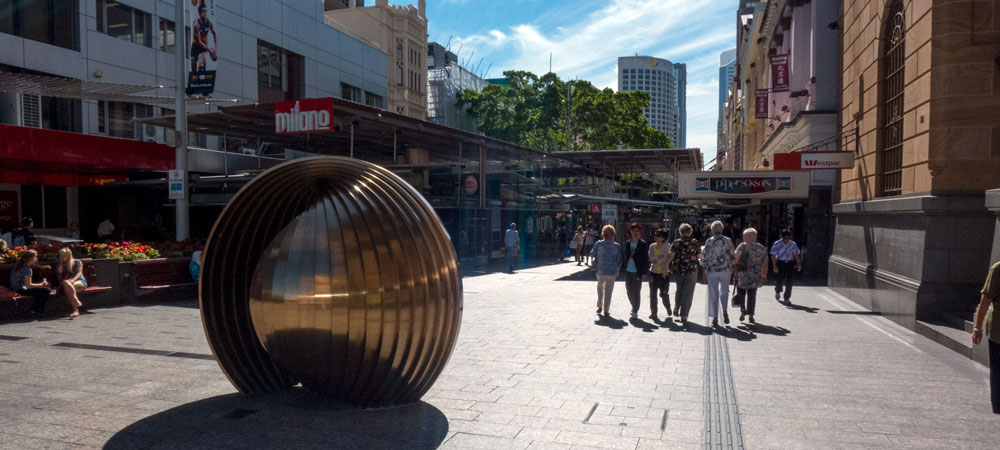
Brisbane definitely would not win any ‘most attractive city award’.
That parts of Brisbane are ugly and the local government has allowed this to happen
Beauty in urban development is something we should insist on!
Part Five of Six – South Bank and West End.
Links to all: Part One – Part Two – Part Three – Part Four – Part Five – Part Six

There is no doubt that there are aspects of Brisbane that a far more interesting than the city centre. South Bank and the West End are such places. South Bank Parklands have been managed well for years up till now – but I am not so sure about the current management.
South Bank is a place for leisure, for the family, for picnics, for food and cafes and the cultural centres, for events, and especially for culture such as visits to the state gallery.
Any major city or city district has ambitions to attract tourists. When it works well everyone prospers and the locals can be happy. Tourists arrive and spend money.
That parts of Brisbane are ugly and the local government has allowed this to happen
Beauty in urban development is something we should insist on!
Part Four – nearby the Brisbane Central District
Links to all: Part One – Part Two – Part Three – Part Four – Part Five – Part Six
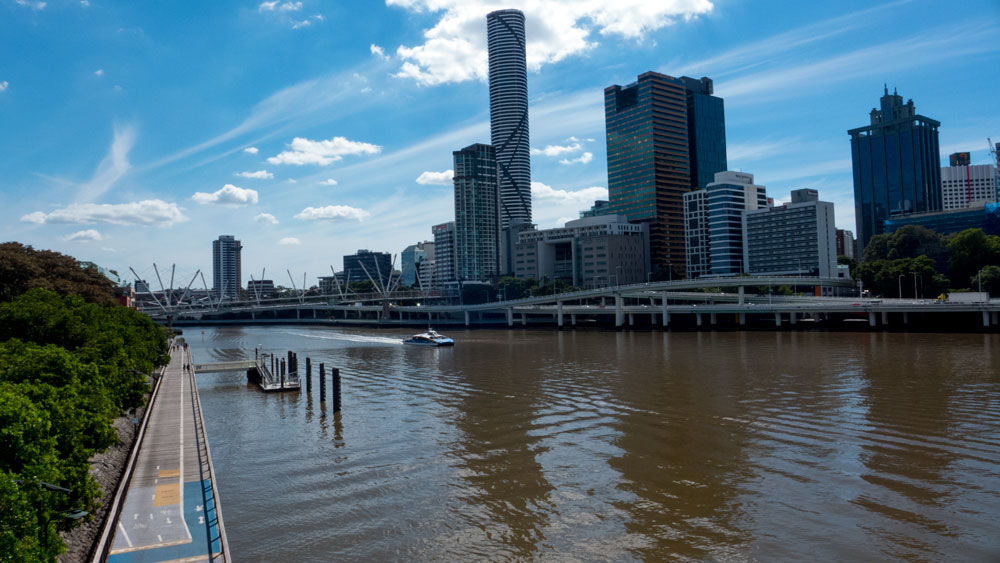
There are aspects of Brisbane are beautiful. The river is magic. The photo above, taken some years back illustrates this. The evening lights enhance the unfortunate placement of major roads along the river’s edge. These freeways are transport engineering successes but are barriers to any hope of joining the city to the river.
Brisbane’s South Bank Corporation’s lack of equity in their management
It was while researching the background on my pieces on Brisbane and in particular on the South Bank Corporation, that I was checking on its corporate status when I came across a rude piece of evidence on the corporation. Continue reading Brisbane’s South Bank Corporate Equity
That parts of Brisbane are ugly and the local government has allowed this to happen
Beauty in urban development is something we should insist on!
Part Three – Brisbane Central District
Links to all: Part One – Part Two – Part Three – Part Four – Part Five – Part Six

The central area of the city of Brisbane has evolved into a modern city with many historic buildings surviving. These heritage buildings are now surrounded by an over abundance of glass and concrete walls of taller office building. It is not a pretty sight.
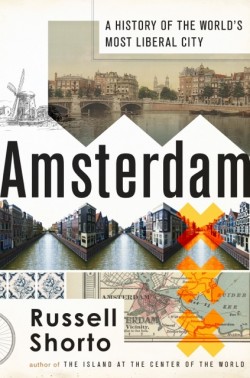
If you have any interest in liberal thinking, tolerance and the enlightenment, then this is a book you must read.
Given the threats to these values almost daily by the current Australian government, it is a must to take time out and do a reality check on just how far backwards these elected clowns are trying to take us.
While obviously about the city, this book is really a celebration of the people and their influence on the whole western world.
That parts of Brisbane are ugly and the local government has allowed this to happen
Beauty in urban development is something we should insist on!
Part Two – arriving from the airport
Links to all: Part One – Part Two – Part Three – Part Four – Part Five – Part Six
There was much ado about this whole precinct development when it was being built and this continues through to today. Having visited the site a few times now, to meander, to eat, to meet for coffee and the occasional business, I have to say that it is a very mixed result. It is worth a visit on a busy day to see for yourself. But it does not match some of the rhetoric that has been put about – click here for an example of some project-porn spin*.
That parts of Brisbane are ugly and the local government has allowed this to happen
Beauty in urban development is something we should insist on!
Part One – commenting on the News and its response to Alain
Links to all: Part One – Part Two – Part Three – Part Four – Part Five – Part Six
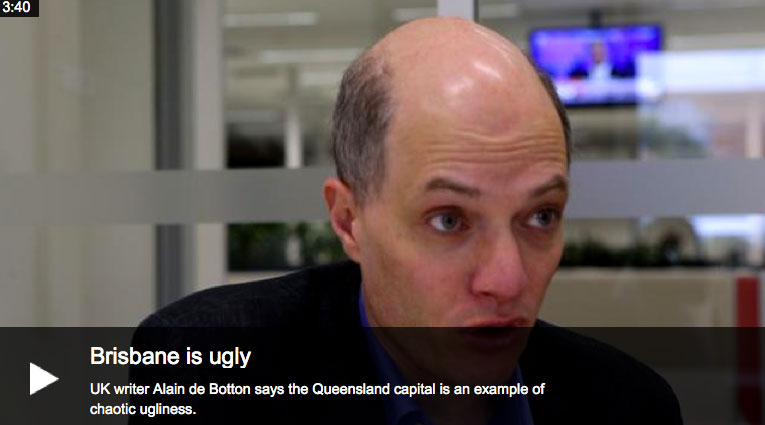
A mild storm recently broke in the media around comments made by Alain de Botton. To view one Brisbane local news piece on this and see Alain respond – click here. I was alerted to there being something wrong here when certain commentators responded. Oh the media just did not read his new book on the media!
From the Independent Australia Blog comes the warning about food security.
The latest report from the United Nations Intergovernmental Panel on Climate Change paints a grim picture for the future of Australia’s food security.
Food security is an issue that must be carefully and comprehensively addressed by our government as a matter of critical forward planning. And it must be given priority over trade “arrangements” that may have attractions now, but which will limit the government’s policy options when current circumstances change, which all indicators point to being soon.
These comments not are about the exhibitions of the War Memorial. These are comments about the building and recent additions.
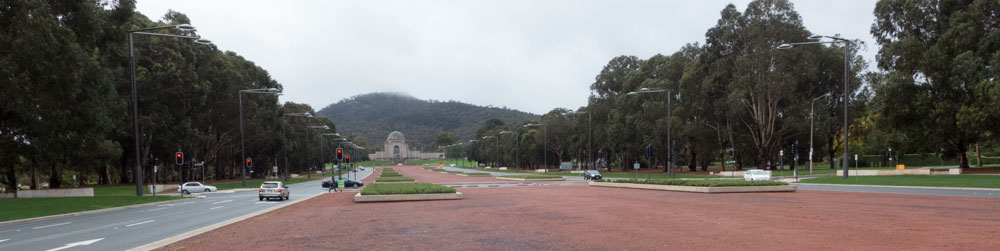
Many times the expression is used when an architect is talking about a building, about how their architecture fits into the landscape. In most cases this proves to be just false architectural spin. However there is one building here in Canberra that does sit beautifully with the landscape. That building is the Australian War Memorial in Canberra
City main street networks show a drastic shift away from historic patterns of human-scale design
Have you ever wondered why some places seem built for automobiles as opposed to humans?
In a recent study, J. Alexander Maxwell and fellow researchers from the University of Strathclyde’s Urban Design Studies Unit find evidence that before the rise of the automobile, cities developed on a walkable “human” scale, with main streets that rarely exceeded 400 meters (a little more than 437 yards).
Along with Charles R. Wolfe, they argue that this uniformity reveals an underlying pattern to pedestrian city settings, which should be considered in contemporary urban design and policies.
This is a proposal to enhance some present green infrastructure within inner north Canberra.
The North Canberra Greenway could be formed by linking and then enhancing the present green infrastructure elements throughout inner north Canberra.
There’s many a piece of research and publication about the links between access to parks and people’s health and wellbeing. Any urban area that includes ample public green spaces will always be sought after and the benefits are evident in the community attitudes towards their residential areas. Parks enhance the sense of community.
When women earn high positions and speak up for their professional goals, they encourage more to do the same. There’s an online article by Barbara B. Kamm in which she says: Continue reading Equity and Corporate Boards
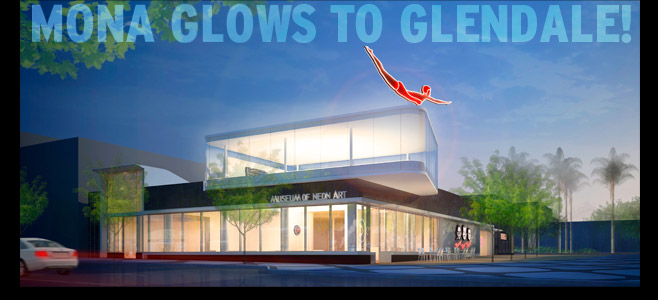
Neon Lights and The Museum of Neon Arts
I happen to like all things neon. I have been fascinated by neon lights for years. We have twice visited the Museum of Neon Art in LA; noting that they have moved again to another new home, this time in Glendale. (above)
Here’s a few YouTube presentations on Neon (see below):
Flown anywhere lately? You were not alone – You had company up there.
A data visualization of Air Traffic in Europe was created from real flight data. It shows the air traffic which flies on a typical summer day and highlights the intensity of the operation in Europe – an operation which runs 24x7x365.
Canberra had until recently an envious program of public art under the previous Chief Minister, Jon Stanhope. The city has a mix of public art. That’s the nature of the beast. But!
There’s not much more to be said about the behaviour of The Rabbott Government Attorney General, George Brandis, and his statements on racial discrimination. We reached the bottom when he said “People do have the right to be bigots you know.”
Penny Wong then became a target for his criticism.
Canberra Times Article, by Marie Coleman
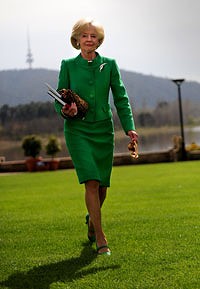
With the first female Governor General now having departed the scene, it was indeed timely for a local writer to sum up the messy situation that occurred thanks to our infamous Prime Minister.
That is, The Rabbott took this opportunity of the departure of this well-loved person from this high office, to confuse any celebration by announcing that he was bringing back the out of date honours of Knighthoods and Dames. To rub it in fully, The Rabbott announced that Quentin Bryce was to be the first to be honoured.
I remain skeptical about all the hype around green roofs and green walls. This is not to say that when delivered comprehensively, that green roofs can be very effective in reducing temperatures of the buildings. It is more that so many of the current crop of green roofs and green walls are token add-ons.
Despite the hype by the building companies and their contractors about how wonderful particular green walls and roofs are, many are superficial and deliver very limited benefit, if any. When done properly, a green roof can be a contributor to the green infrastructure of urban areas.
Julia Baird, New York Times
Julia Baird has published an opinion piece in the New York times using a review of a book to comment on how mothers who work continue to be maligned in the 21st Century.
Happy City, Charles Montgomery, 2013
From the blurb online:
“A brilliant, entertaining and vital book. Montgomery deftly leads us from our misplaced focus on money, cars and stuff to consider what makes us truly happy. Then everything changes – the way we live, work and play in humanity’s major habitat, the city.” – David Suzuki
Why Getty Going Free Is Such a Big Deal
The company has made tens of millions of its photos free for noncommercial use.
To quote from The Atlantic:
Exhibition title: Australian vernacular photography
Once again, the Art Gallery of NSW has brought together an interesting exhibition of Australian photography – click here.
This is a must see for anyone with interests in photography. Judy Annear, the curator, has brought some gems from their vast collection.
From the Guardian – and article titled:
Big Food is in wilful denial about the harm sugar does to our children
Somewhere on the back seat, a child asks: are we there yet? Is the world safe for me?
The adults present respond: Not Yet. Must be just around the corner.
Happy City, Charles Montgomery, 2013
From the blurb online:
“A brilliant, entertaining and vital book. Montgomery deftly leads us from our misplaced focus on money, cars and stuff to consider what makes us truly happy. Then everything changes – the way we live, work and play in humanity’s major habitat, the city.” – David Suzuki
After decades of unchecked sprawl, more people than ever are moving back to the city. Dense urban living has been prescribed as a panacea for the environmental and resource crises of our time. But is it better or worse for our happiness? Are subways, sidewalks and tower dwelling an improvement on the car-dependence of sprawl?
for more on the book – click here – or for a full review – see the article in Metropolis Online – click here
University of Sydney, Macleay Museum

This exhibition is advertised as being of historic photographs from the Pacific spanning a century beginning from the late 1850s. With these words both in advertising and online, the expectations were for an extensive exhibition of photographs of the pacific islands.
The photographs of architecture of the Post-Soviet era.

There’s a review in WIRED online of a book. To quote: Frank Herfort moved to Moscow with no intention to make a book. Like all photographers, the German-born artist always keeps one eye open for potential subjects, but making a book of architectural photos was never the plan. “While scouting the new city for myself, I began to notice these amazing buildings.”
NGA Garden of the East: photography in Indonesia 1850s–1940s
from the Canberra Times, March 8 2014, comes this review by Sacha Grishin. Click here for the review.
For more on the National Gallery of Australia exhibition – click here. Note that the exhibition is free and runs till 22 June 2014.
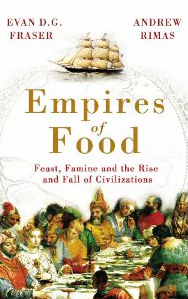
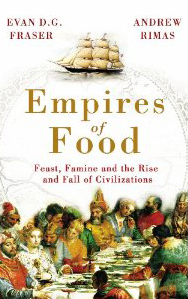
Evan D. G. Fraser and Andrew Rimas. Random House, 2010
As if there was not enough information available on how the world is not paying attention to all the warning signs, this book was recommended to me to make me aware of the dire situation coming our way in relation to the supply of adequate food for coming generations.
This is all linked in with the issues of climate change, population growth and the way we have allowed our food supplies to be controlled by particular market and political forces. This book is a must read for all.
Empires of Food: Feast, Famine and the Rise and Fall of Civilizations
Evan D. G. Fraser and Andrew Rimas. Random House, 2010
As if there was not enough information available on how the world is not paying attention to all the warning signs, this book was recommended to me to make me aware of the dire situation coming our way in relation to the supply of adequate food for coming generations.
This is all linked in with the issues of climate change, population growth and the way we have allowed our food supplies to be controlled by particular market and political forces. This book is a must read for all.
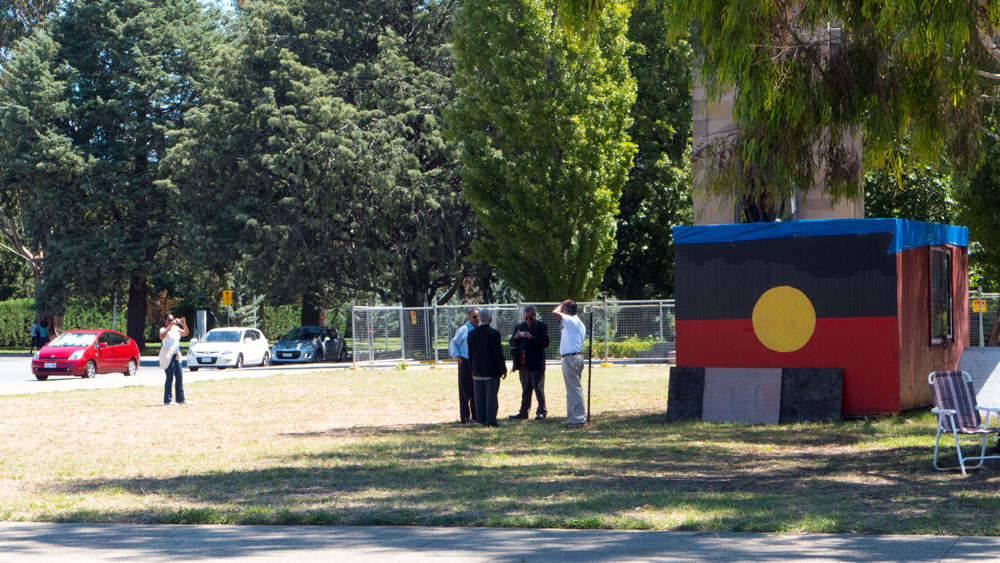
The tent embassy has had a mixed history since the first one was established in January 1972 in Canberra right in front of the former Parliament House. There is a reasonably full history on wikipedia – click here. It is worth reading.
Presently the number of tents varies as does the level of activity. Over the years I am aware that the government as well as the National Capital Authority have had discussions about its future. Nothing has changed except for the comings and goings of the residents.

An article appeared in the Fairfax press on March 1st 2014 under the by-line: A long-lost print has rewritten the story behind one of Australia’s most famous photographs.
Alas, the story was not quite a full representation of the facts!
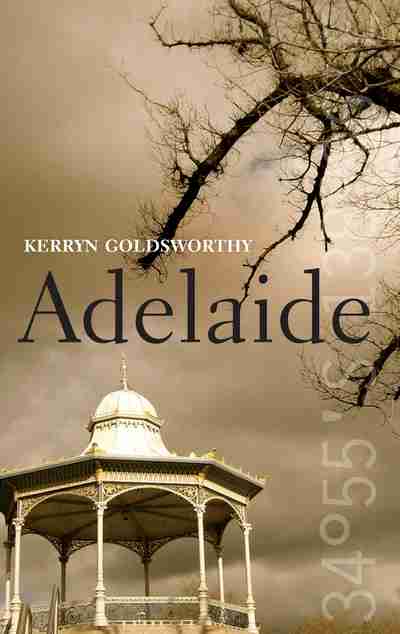
This is another of those smallish book published about Australia’s capital cities. I have already reviewed Hobart, by Peter Timms.
I have to confess that I did not take to the book on Adelaide and at times seriously considered giving up. In the end I had a move quickly through whole sections in order to see where the author was going.
There is book review on the Guardian site. This is timely as Australia government goes through all sorts of actions to set the clock back on environmental issues. I dread what chance anyone would have right now of confronting this government over the long-term treatment of our soils, our biodiversity; in fact anything at all to do with nature.
This is a difficult review. I am not as enthusiastic about this major park project as all the reviews I can find online. I am very ware that it has been granted all sorts of awards. Please check award accolades here in the UK Telegraph, and again on this award site.
If you have been to any event lately, you may have observed how people now use their phones to take photographs. This habit of taking a photo before taking something in is not new. What is new is the barrage of camera phones that now appear above any crowd when something is happening. There’s a very telling photograph heading up an article on this in Rolling Stone. Click here for the article.
and I also agree with most of the listed complaints about people’s behaviour at concerts.
Referring to a posting on The Nature of Cities: Involving Children in the Design of Park Renovations to Create Green Places for Play with Urban Nature
Locally there have been several wonderful initiatives that have delivered wetlands to local neighbourhoods. These developments were very much welcomed and have become destination for people taking walks.
The new wetlands were primarily established to become catchments for run off water that had previously been channeled into 1960s concrete drains straight down through the suburbs into the lake. Water is now being partially diverted along the way to provide storage as well as being piped off site to other large water tanks for other irrigation purposes.
Developed by the American Society of Landscape Architects, this presentation will assist advocacy to deal with the forecasted food shortages as climate change kicks in. The presentation demonstrates how to turn a conventional community into an edible city. Learn how to transform unproductive spaces into agricultural landscapes that help fight obesity and reduce food deserts. Make sure you note the address and send it onto anyone in decision making roles.
Developed by the American Society of Landscape Architects, this presentation should assist anyone with their advocacy for Revitalizing Cities with Parks. In these times of reactionary governments and tight budgets, it is important to maintain efforts to introduce the simple idea to create more parks.
I was attending a meeting of combined community council two years ago, when to members of the public who were in attendance made very similar appeals. Both were very upset with the quality of the redevelopments that had appeared within their street, despite the local communities objections about key aspects of the developments.
As far as I could ascertain, they were not necessarily opposed to the infill of their suburb. It was more about the nature of the apartments being built.
I was attending a meeting of combined community council two years ago, when to members of the public who were in attendance made very similar appeals. Both were very upset with the quality of the redevelopments that had appeared within their street, despite the local communities objections about key aspects of the developments.
As far as I could ascertain, they were not necessarily opposed to the infill of their suburb. It was more about the nature of the apartments being built.
Despite all the evidence and all the advocacy, our political leaders are still not up to the challenge of dealing with something that is a threat to life as we have come to know it here on this planet. True leadership seems to be in short supply these days.
There are a host of professions that could be showing much greater leadership. Many have learnt to be spin doctors and have filled pages with their commitments and their policies. All this is very nice and very polite.
Once upon a time I was a rusted on ABC (Australian Broadcasting Corporation) watcher. I relied on the ABC, and SBS, for most of my news and current affairs.
Over time as a reaction to the style of gotcha journalism that became the norm on the ABC, radio and TV, I started watching less and less. Today as the result of this quiet reduction in watching and listening to the ABC, I have found that I now routinely do not watch or listen to the ABC.
This is a story about local people caring for their own. In the first instance one woman’s determination to make the open space beautiful around her new home. And then a story about the local community who have since stepped in to keep and maintain her legacy, now called the Grace Marchant Garden.
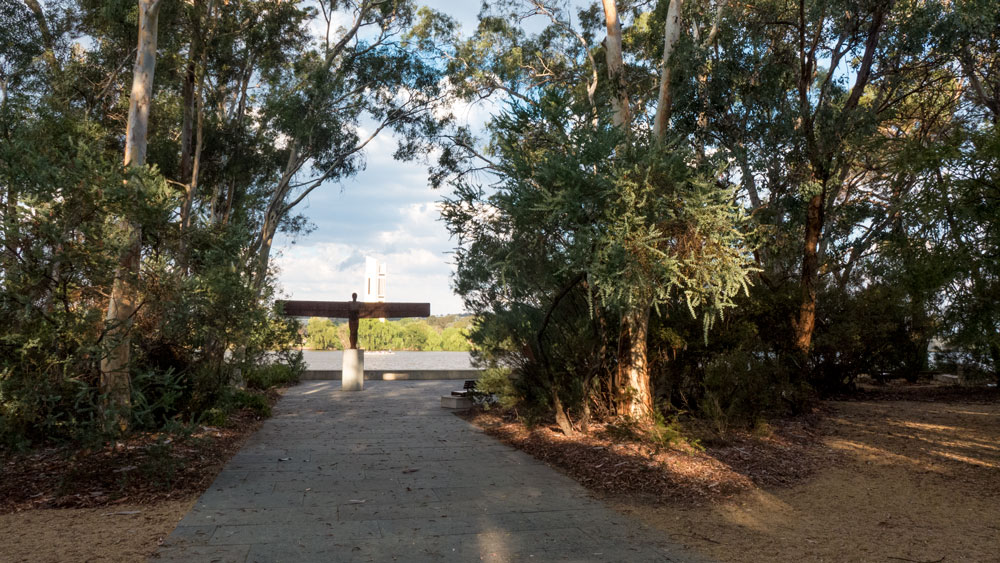
It was just this week that I managed to get myself down the wonderful National Gallery of Australia’s sculpture garden to have a look at the Angel of the North. The piece has been on location for several years. This was the fist time I have seen this piece. Of course, this is the life-size marquette of the original Angel of the North, being about one tenth the size of the original.
Would we all have wings to zoom around the globe to visit a few photography exhibitions. But wait, that’s called the internet. So here are a few of the current exhibitions presently with an online presence that we have looked into recently.
This is a fairly random selection and we are linking to those where there is an accessible online exhibition. If a gallery has used flash and therefore there are no direct links, unfortunately they are fairly useless for this exercise. Shame there are a few that miss out, such as one of my favourite Singapore galleries: Gallery 2902. Continue reading photography
and now we have a misuse of the term Judea-Christian
I would recommend first reading the Wikipedia contributions on the use of the term, Judea-Christian (click on the image).
This term, Judea-Christian, is being thrown about by our Rabbott government and its appointed camp followers who are to review the yet to be implemented National Schools Curriculum.
There is now doubt that this carefully orchestrated use of the term Judea-Christian is in fact a nasty stirring up of discrimination.
The urgent requirement for education to address ecology and biodiversity
Our cities and towns need to be adapted to deal with the current and future pressures of climate change. This requires a new level of expertise. One essential element in this the education of the professionals who must deal with climate change adaptation in the design, planning and development of our urban spaces. Green wash, which is the current standard, is no longer acceptable. Continue reading Education in Biodiversity and Ecology
If cities look to stay within their boarders, there is the need to seek acceptable ways to intensify the number of residents within the older suburbs. This requires an intelligent engagement with the present residents of suburban areas on a case by case basis.
Given the need to address climate change within the suburbs as they are being redeveloped and upgraded throws up a host of requirements that should have by now have been built into legislation. Sadly this is not so as most of the re-development and intensification as been left to laissez-faire market forces.
The Latest from our Rabbott Government
Be Afraid, Be Very Afraid: The national edukashon minister announced that after years of development, years of consultations and a bloody huge amount of work, that he considers he needs to appoint two close political associates to look into getting ‘balance’ back into the curriculum. They state that they will be independent. That probably means their report will be independent of facts and of intellect.
It is obvious that this is more about getting the old ‘culture’ wars started again and to drive particular ideological points into the headlines while loads of other disastrous changes are being put through by the Rabbott.
Lumio Lamp
I saw this online and thought of a friend who has been looking for a light to take outside to have dinner in their courtyard. We have looked at various solar light thingys. None quite worked out. and now in early 2014, maybe this is. Not yet available but there is the you tube promotion below. Continue reading Innovation
We wandered recently over to Green Square Kingston for some late breakfast and coffee. There are now four different cafes serving breakfast/brunch in this one place with another across the street. I would estimate that there would be at least another six further around the block. We thought we may check out a new cafe that had opened just weeks earlier.
A woman’s right to enjoy the city
Dealing with the overlooked issue in Urban Design, Women and the City. As part of our series on eliminating violence against women and girls in our cities produced in collaboration with the Huairou Commission, Mumbai architect Pallavi Shrivastava offers a personal reflection on how the threat of violence forces women not only to change our movements but also prevents us from enjoying our cities, and thus from helping to make them the cities we want them to be. click here for the full article.
Centenary of Women’s Suffrage
This is an unfortunate case of how things can get out of hand and go wrong in a huge way.
Public health and landscape: creating healthy places (November 2013)
The UK Landscape Institute believes that greater priority needs to be given to prevention of ill health in public health and social care. All those involved in creating healthy places, public health professionals, planners and landscape architects, need to recognise that landscape has enormous potential to improve our health and wellbeing. In Australia, despite all the evidence being available, it has been a struggle to have the Australian Government recognise the importance of the links between our public spaces and the population’s health and well being.
Click here for UK Landscape Institute Public Health Policy links
The Souvenir Genre, an essay by Mel Campbell on exhibition catalogues, published in Meanjin January 2014.
One aspect of visiting exhibitions is the catalogue. Sometimes we flick through it and sometimes we purchase a copy. The catalogue may be purchased as a souvenir of the exhibition but once away from the exhibition, the publication has a life of its own.
There are several exhibition catalogues in the queue to be reviewed through this blog. The first in line is most likely to be Australia, from the 2013 Royal Academy exhibition in London. This exhibition was partnership with the National Gallery of Australia. There is an interesting story there to come concerning reviews and the response from the NGA as well as an interesting perspective from a Sydney commentator.
Meanwhile here’s a recommended article by Mel Campbell on exhibition catalogues.
———————————————–
Paul Costigan, 4 January 2014
Seven Rules for Sustainable Communities
Design Strategies for the Post Carbon World, Parick M Condon
Questions of how to green the North American economy, create a green energy and transportation infrastructure, and halt the deadly increase in greenhouse gas buildup dominate our daily news. Related questions of how the design of cities can impact these challenges dominate the thoughts of urban planners and designers across the U.S. and Canada.
With admirable clarity, Patrick Condon discusses transportation, housing equity, job distribution, economic development, and ecological systems issues and synthesizes his knowledge and research into a simple-to-understand set of urban design rules that can, if followed, help save the planet.
No other book so clearly connects the form of our cities to their ecological, economic, and social consequences. No other book takes on this breadth of complex and contentious issues and distills them down to such convincing and practical solutions. And no other book so vividly compares and contrasts the differing experiences of U.S. and Canadian cities.