Review: Visual Arts
Fabrice Fouillet photography: Colosses in the landscape

Photographer, Fabrice Fouillet, has a series of images of Colosses that were created to dominate and dwarf the landscape and buildings around them.
Photographer, Fabrice Fouillet, has a series of images of Colosses that were created to dominate and dwarf the landscape and buildings around them.

This year, Russ & Daughters, the acclaimed appetizing institution on the Lower East Side, turns a hundred years old. To celebrate the occasion, the fourth-generation co-owners are giving customers a place to sit.
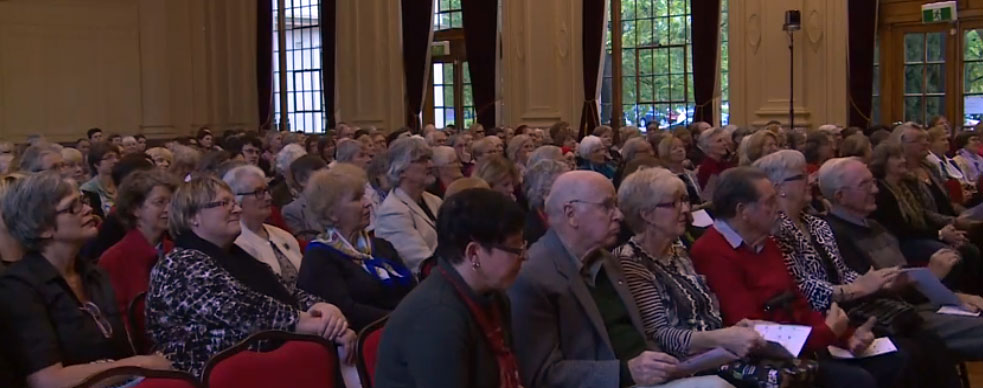 Held in the Albert Hall, Canberra, on 26 March 2014.
The proposition was that ‘Australia doesn’t need Women’s History Month’. Continue reading Australian Women’s History Forum
 There are all sorts of stories in circulation in Canberra as a result of the decision to introduce paid parking for all areas within the Parliamentary Triangle. This has a big impact on those who work in the area. Some public servants are devising clever tricks to continue to have free parking.
This will also mean that visitors will now have to pay to visit the national institutions and have limited time to visit. This could be a marked change in how visitors regard the national cultural institutions. I know as a local, it will mean less visits to these institutions.
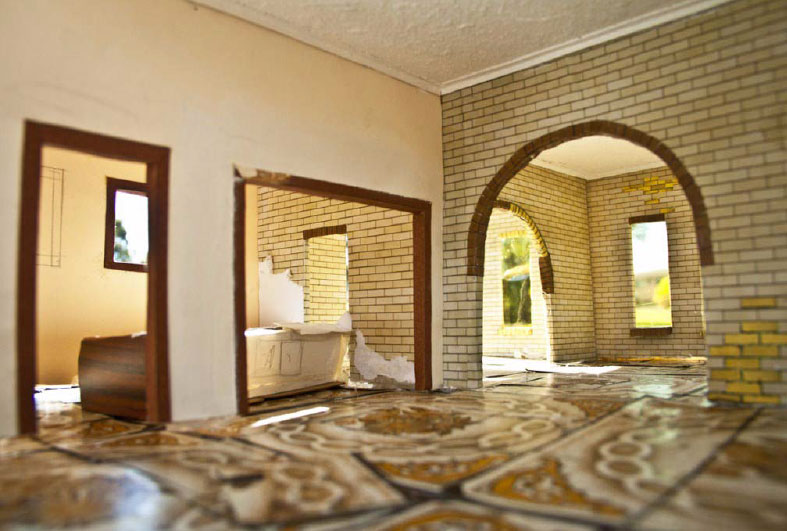
I have just come back from Brisbane and had the wonderful experience of seeing more photographs by Anna Carey. I have mentioned her work previously — click here for that post.
 Do you want to see something really really scary?
The Monthly has published an excellent article of the Abbott crowd and how his old boys are in charge. The image on the cover is worrying simply because it is so factual. The artist has captured their collective personalities far too accurately.
Do not show this image to children. Click here.
That parts of Brisbane are ugly and the local government has allowed this to happen
Part Six of Six – some final words
See previous: Part One – Part Two – Part Three – Part Four – Part Five
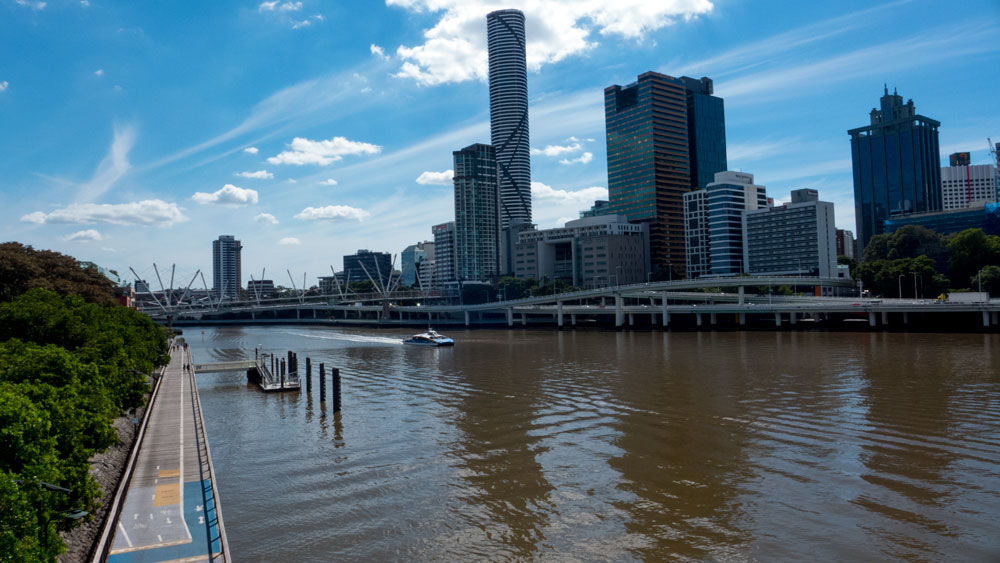
Brisbane definitely would not win any ‘most attractive city award’.
 So we have governments in Australia trying to make political capital out of any proposals on infrastructure. Have we ever considered how other governments travel when it comes to delivering on infrastructure. Well let’s try Italy.
That parts of Brisbane are ugly and the local government has allowed this to happen
Beauty in urban development is something we should insist on!
Part Five of Six – South Bank and West End.
Links to all: Part One – Part Two – Part Three – Part Four – Part Five – Part Six

There is no doubt that there are aspects of Brisbane that a far more interesting than the city centre. South Bank and the West End are such places. South Bank Parklands have been managed well for years up till now – but I am not so sure about the current management.
South Bank is a place for leisure, for the family, for picnics, for food and cafes and the cultural centres, for events, and especially for culture such as visits to the state gallery.
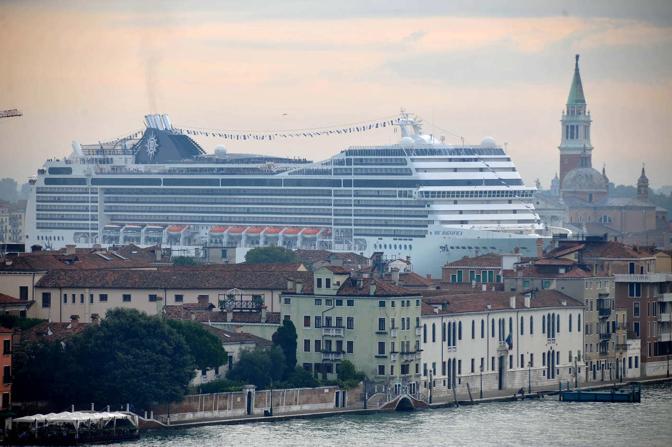
Any major city or city district has ambitions to attract tourists. When it works well everyone prospers and the locals can be happy. Tourists arrive and spend money.
That parts of Brisbane are ugly and the local government has allowed this to happen
Beauty in urban development is something we should insist on!
Part Four – nearby the Brisbane Central District
Links to all: Part One – Part Two – Part Three – Part Four – Part Five – Part Six

There are aspects of Brisbane are beautiful. The river is magic. The photo above, taken some years back illustrates this. The evening lights enhance the unfortunate placement of major roads along the river’s edge. These freeways are transport engineering successes but are barriers to any hope of joining the city to the river.
Brisbane’s South Bank Corporation’s lack of equity in their management
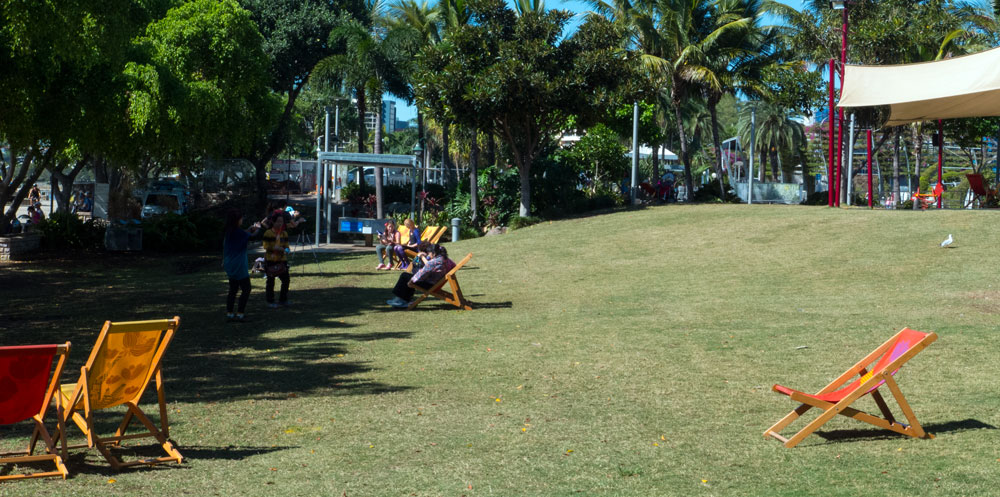
It was while researching the background on my pieces on Brisbane and in particular on the South Bank Corporation, that I was checking on its corporate status when I came across a rude piece of evidence on the corporation. Continue reading Brisbane’s South Bank Corporate Equity
That parts of Brisbane are ugly and the local government has allowed this to happen
Beauty in urban development is something we should insist on!
Part Three – Brisbane Central District
Links to all: Part One – Part Two – Part Three – Part Four – Part Five – Part Six
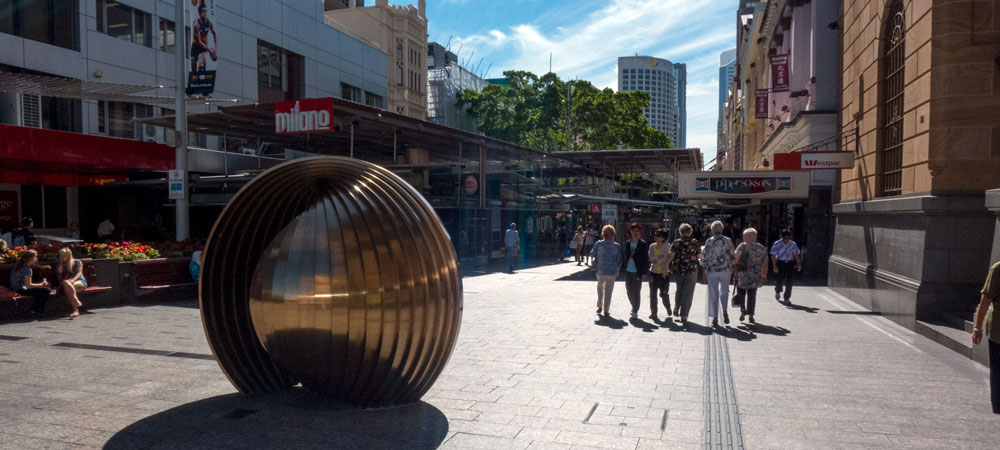
The central area of the city of Brisbane has evolved into a modern city with many historic buildings surviving. These heritage buildings are now surrounded by an over abundance of glass and concrete walls of taller office building. It is not a pretty sight.
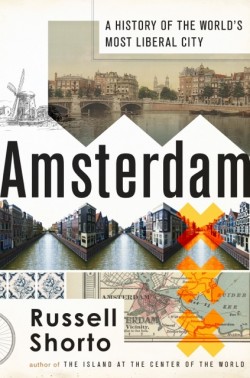 If you have any interest in liberal thinking, tolerance and the enlightenment, then this is a book you must read.
Given the threats to these values almost daily by the current Australian government, it is a must to take time out and do a reality check on just how far backwards these elected clowns are trying to take us.
While obviously about the city, this book is really a celebration of the people and their influence on the whole western world.
That parts of Brisbane are ugly and the local government has allowed this to happen
Beauty in urban development is something we should insist on!
Part Two – arriving from the airport
Links to all: Part One – Part Two – Part Three – Part Four – Part Five – Part Six
There’s an article in the Guardian by George Monbiot titled:
Can you put a price on the beauty of the natural world?
Those who reduce nature to a column of figures play to an agenda that ignores its inherent value – and seeks to destroy it
To which one response online was: Great article George.
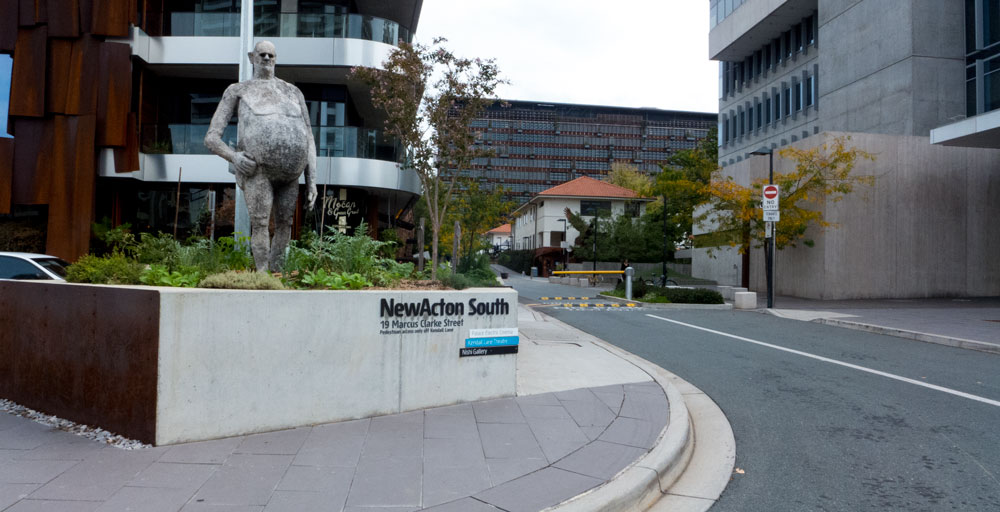
There was much ado about this whole precinct development when it was being built and this continues through to today. Having visited the site a few times now, to meander, to eat, to meet for coffee and the occasional business, I have to say that it is a very mixed result. It is worth a visit on a busy day to see for yourself. But it does not match some of the rhetoric that has been put about – click here for an example of some project-porn spin*.
That parts of Brisbane are ugly and the local government has allowed this to happen
Beauty in urban development is something we should insist on!
Part One – commenting on the News and its response to Alain
Links to all: Part One – Part Two – Part Three – Part Four – Part Five – Part Six
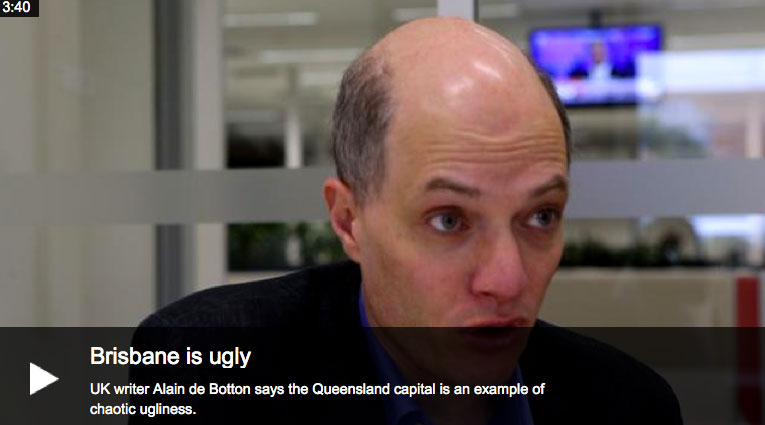
A mild storm recently broke in the media around comments made by Alain de Botton. To view one Brisbane local news piece on this and see Alain respond – click here. I was alerted to there being something wrong here when certain commentators responded. Oh the media just did not read his new book on the media!
The same crowd that managed to assist in bringing down the Rudd Labor government when the government proposed a tax on the riches being ripped out of the country, have just introduced an online promotion to bring together those in favour of Big Coal and its future.
Sadly for Big Coal have entered the democratic world of online chats and twitter. The full story is told in the Guardian – click here. Enjoy and chuckle at the expense of the not so bright chiefs of Big Coal.
There’s evidence appearing about the take up of solar may in fact continue to expand and become fully part of the country’s source of electricity. This is amazing given the on-going vicious and well-funded campaigns being carried by Big Coal and their allies in the present Australian Government.
The next big trick is to get solar to be a key issue at the coming elections, both state and federal. With many of the subsidies now being removed, those who have solar are starting to notice how they are being duded by the Big Coal electricity companies who do not want solar to succeed.
There’s a very good article online titled: Rooftop solar may be ‘sleeping giant’ of Australian politics – click here. It is worth a read to gain an update on this debate and some facts on the current rip offs underway.
———————————
Paul Costigan 14 April 2014
A piece from the New Yorker that again points out that the time for action on climate change is now but that inaction has actually become the norm. So many politicians have come to office on the back of statements on climate change, yet here we are in 2014 with no significant actions being undertaken to realistically deal with climate change.
The really sad part is, as pointed out in the article, the longer we allow our national governments to sit on their hands, then the harder it will be in the coming years as the problems will have worsened and become far more difficult to deal with. It seems we are all waiting for someone else to solve this problem.
Eventually of course, someone or at least something will. That will be the planet that rejects the dangerous race called humans.
Here’s the link to the New Yorker article – click here
From the Independent Australia Blog comes the warning about food security.
The latest report from the United Nations Intergovernmental Panel on Climate Change paints a grim picture for the future of Australia’s food security.
Food security is an issue that must be carefully and comprehensively addressed by our government as a matter of critical forward planning. And it must be given priority over trade “arrangements” that may have attractions now, but which will limit the government’s policy options when current circumstances change, which all indicators point to being soon.
These comments not are about the exhibitions of the War Memorial. These are comments about the building and recent additions.
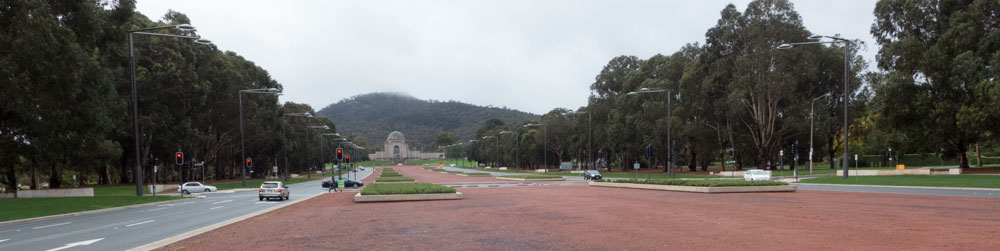
Many times the expression is used when an architect is talking about a building, about how their architecture fits into the landscape. In most cases this proves to be just false architectural spin. However there is one building here in Canberra that does sit beautifully with the landscape. That building is the Australian War Memorial in Canberra
In a blog on the Huffington Post, the authors point out the obvious. That is, obvious to those who are looking and care as opposed to too many who are presently making decisions about cities and sustainability.
The evidence is there. Design well and all the benefits can follow. Design badly, which is too common, and all the inequities and unsustainable practices come to the fore. As the authors say:
Well-designed cities generate jobs, innovation, and economic growth for all. But when designed poorly — with too much sprawl, waste, and inefficiency — they can divide cities and exacerbate pollution, inequality, and political instability. Moreover, poor design has long-term consequences given that urban infrastructure often lasts decades. Continue reading Sustainable Cities

We have another blog that focuses on sustainable settlement issues and the many things that we need to be discussing.
click on the graphic above for the Sustainable Settlements Institute blog.
The Huffington Post presents a wonderfully optimistic report about a city that is often regarded as being a terrible example of urban development. I disagree. It has many things wrong with it but if you spend time there you can see that there are some really great things happening. All cities have their problems and many do not much to boast about.
As reported many times, the current mainstream media has become part of the problem in encouraging the world to act urgently on climate change.
In Australia it has become painfully obvious that media, such as our own ABC, has gone far too far in providing what they term as ‘balance’. The voices of the scientists and the weight of their reports and the mountains of evidence is ‘balanced’ by the time given to complete skeptics and their lack of scientific evidence.
City main street networks show a drastic shift away from historic patterns of human-scale design
Have you ever wondered why some places seem built for automobiles as opposed to humans?
In a recent study, J. Alexander Maxwell and fellow researchers from the University of Strathclyde’s Urban Design Studies Unit find evidence that before the rise of the automobile, cities developed on a walkable “human” scale, with main streets that rarely exceeded 400 meters (a little more than 437 yards).
Along with Charles R. Wolfe, they argue that this uniformity reveals an underlying pattern to pedestrian city settings, which should be considered in contemporary urban design and policies.
This is a proposal to enhance some present green infrastructure within inner north Canberra.
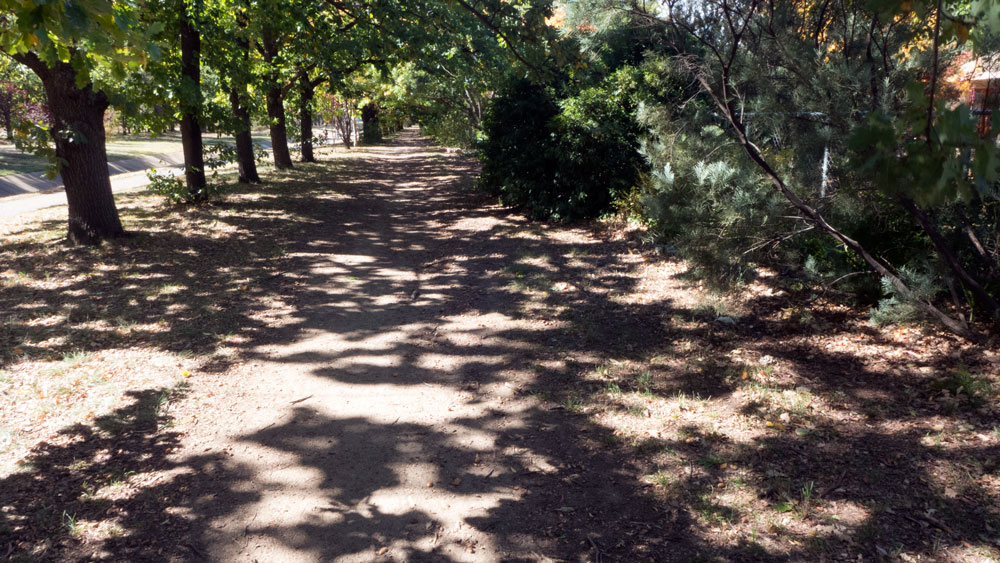
The North Canberra Greenway could be formed by linking and then enhancing the present green infrastructure elements throughout inner north Canberra.
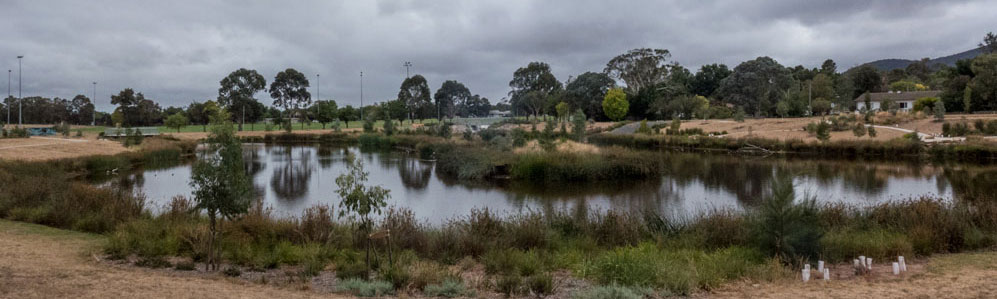
Australia has a very mixed understanding and relationship with wetlands. I happen to be fortunate to live close to one. This came into existence just a couple of years ago when the local government transformed a disused and degraded parkland into a wetland attached to an old style concrete drain.
The Huffington Post presents a wonderfully optimistic report about a city that is often regarded as being a terrible example of urban development. I disagree. It has many things wrong with it but if you spend time there you can see that there are some really great things happening. All cities have their problems and many do not much to boast about.

there’s so many issues
This government draws its strength from others and from their belief in the right to be in government. This government does not care what is being said by people such as those in the March in March protest. This government would view the protesters as being the problem, not their messages. It is going to be a difficult few years living in a country where democracy is being trashed.
It is worth checking the latest list of The Rabbott’s national wreckage – click here.
———————————————–
Paul Costigan, 5 April 2014
Australia has a very mixed understanding and relationship with wetlands. I happen to be fortunate to live close to one. This came into existence just a couple of years ago when the local government transformed a disused and degraded parkland into a wetland attached to an old style concrete drain.
This wetland was part of a series of several wetlands installed into the inner northern suburbs of Canberra. Our hope is that one day the same local government will take on the challenge of enlarging the nearby wetlands to include much of the concrete drains through the inner northern suburbs. This would then be then be a linear park and wetland that would wind its way through several suburbs and increase the amount of green infrastructure. It would also be a wonderful walkway and increase the chances of locals getting out and walking.
 Feathers have been quietly ruffled locally as the ACT Government (local government for Canberra) has announced it is to introduce a new proposal that would see identified precincts developed using a fast-track development process. This change to planning has been reported on in the Canberra Times and should be read before reading my comments that follow below – click here
What follows was edited down as a ‘letter to the editor’ on this subject.
Continue reading Canberra Urbanity – Fast Track Developments
There’s many a piece of research and publication about the links between access to parks and people’s health and wellbeing. Any urban area that includes ample public green spaces will always be sought after and the benefits are evident in the community attitudes towards their residential areas. Parks enhance the sense of community.

Most Australian urban areas usually have had parks provided as part of the urban infrastructure. However in too many cases these parks and open spaces end up not being maintained well and sadly many also become places of neglect.
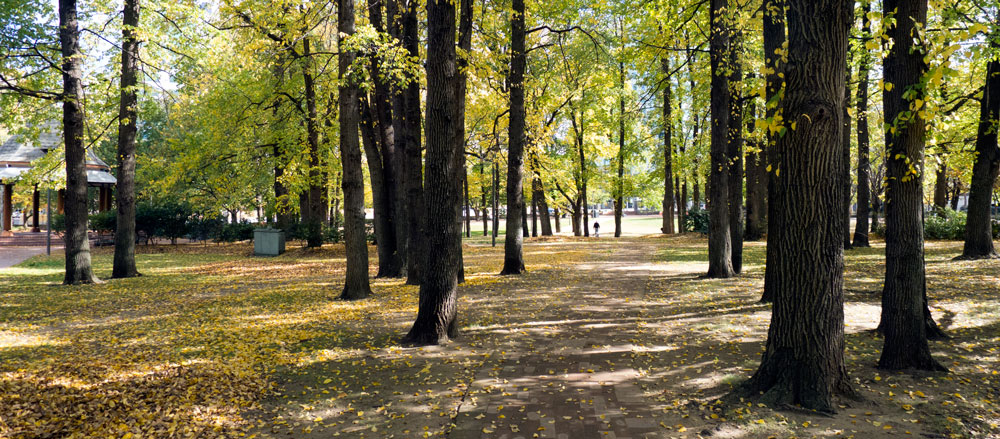 There’s many a piece of research and publication about the links between access to parks and people’s health and wellbeing. Any urban area that includes ample public green spaces will always be sought after and the benefits are evident in the community attitudes towards their residential areas. Parks enhance the sense of community.
 When women earn high positions and speak up for their professional goals, they encourage more to do the same. There’s an online article by Barbara B. Kamm in which she says: Continue reading Equity and Corporate Boards
Neon Lights and The Museum of Neon Arts
 I happen to like all things neon. I have been fascinated by neon lights for years. We have twice visited the Museum of Neon Art in LA; noting that they have moved again to another new home, this time in Glendale. (above)
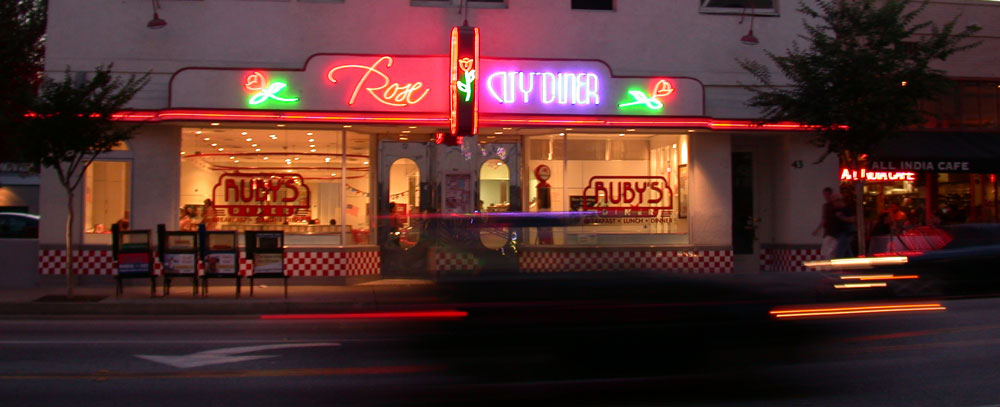 photo by Paul Costigan, 2002
Here’s a few YouTube presentations on Neon (see below):
Two reports on the rise in the use of public transport in the USA.
First – set out below is a March 2014 media statement from the On March 10, 2014 by the American Public Transportation Association. or – check out the original on the association’s own web site – click here.
The second is an article in the New York Times, March 10 2014: Use of Public Transit in U.S. Reaches Highest Level Since 1956, Advocates Report – click here
Flown anywhere lately? You were not alone – You had company up there.

A data visualization of Air Traffic in Europe was created from real flight data. It shows the air traffic which flies on a typical summer day and highlights the intensity of the operation in Europe – an operation which runs 24x7x365.
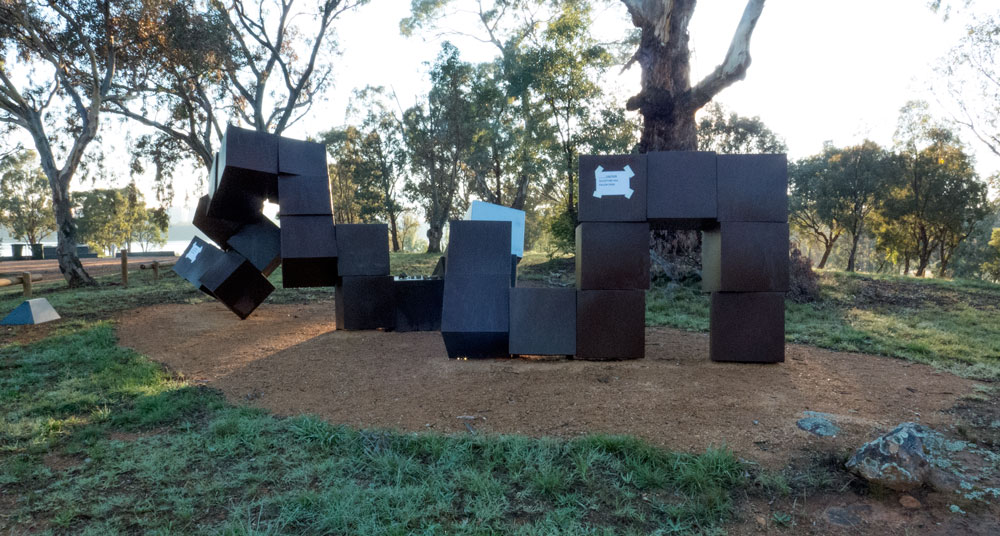
Canberra had until recently an envious program of public art under the previous Chief Minister, Jon Stanhope. The city has a mix of public art. That’s the nature of the beast. But!
From environment360, by judith d. schwartz
The degradation of soils from unsustainable agriculture and other development has released billions of tons of carbon into the atmosphere. But new research shows how effective land restoration could play a major role in sequestering CO2 and slowing climate change.
Soils of the world must be part of any agenda to address climate change, as well as food and water security. There is now a general awareness of soil carbon, an awareness that soil isn’t just a medium for plant growth.
click here for the full article
from the online – Foreign Affairs, April 2014
Conservation is for the first time beginning to operate at the pace and on the scale necessary to keep up with, and even get ahead of, the planet’s most intractable environmental challenges. New technologies have given conservationists abilities that would have seemed like super powers just a few years ago.
Dear Sir Rabbott: The latest IPCC report predicts future food and water supply insecurities, calls for both mitigation and adaptation. No further information is necessary – it is all in the reports – please read them and bring Australia’s national action on climate change into the 20th (and then maybe the 21st) century.
The Guardian – click here – or – The UK Independent – click here
 There’s not much more to be said about the behaviour of The Rabbott Government Attorney General, George Brandis, and his statements on racial discrimination. We reached the bottom when he said “People do have the right to be bigots you know.”
Penny Wong then became a target for his criticism.
Canberra Times Article, by Marie Coleman
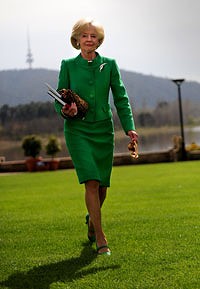 With the first female Governor General now having departed the scene, it was indeed timely for a local writer to sum up the messy situation that occurred thanks to our infamous Prime Minister.
That is, The Rabbott took this opportunity of the departure of this well-loved person from this high office, to confuse any celebration by announcing that he was bringing back the out of date honours of Knighthoods and Dames. To rub it in fully, The Rabbott announced that Quentin Bryce was to be the first to be honoured.
The evidence is out there. “A new study sponsored by Nasa’s Goddard Space Flight Center has highlighted the prospect that global industrial civilisation could collapse in coming decades due to unsustainable resource exploitation and increasingly unequal wealth distribution.”
Yet governments continue to play down the message in order for short term political gain. The article is definitely worth a read, not to become alarmed, but to become more informed of the need to rethink the way we do business. click here.
I remain skeptical about all the hype around green roofs and green walls. This is not to say that when delivered comprehensively, that green roofs can be very effective in reducing temperatures of the buildings. It is more that so many of the current crop of green roofs and green walls are token add-ons.
Despite the hype by the building companies and their contractors about how wonderful particular green walls and roofs are, many are superficial and deliver very limited benefit, if any. When done properly, a green roof can be a contributor to the green infrastructure of urban areas.
Julia Baird, New York Times

Julia Baird has published an opinion piece in the New York times using a review of a book to comment on how mothers who work continue to be maligned in the 21st Century.
There’s a Crikey post on Australia’s Operation Sovereign Borders – or more accurately – Operation Silly Buggers. The article is on Crikey and may or may not be available to everyone as it requires a log-in. But hopefully it will work as it says it all about the lunacy of our Rabbott government. click here.
PBS dives headfirst into the myth of clean coal and pretty much tears it apart using something we don’t often see these days when it come US energy issues: facts. And the most complete take-down of “clean coal” in the segment came from the CEO of the second largest coal electricity company in the US.
see the report on the program (not available online to Australia) through the web site – Coal is Dirty – click here.
Happy City, Charles Montgomery, 2013
 From the blurb online:
“A brilliant, entertaining and vital book. Montgomery deftly leads us from our misplaced focus on money, cars and stuff to consider what makes us truly happy. Then everything changes – the way we live, work and play in humanity’s major habitat, the city.” – David Suzuki
 Why Getty Going Free Is Such a Big Deal
The company has made tens of millions of its photos free for noncommercial use.
To quote from The Atlantic:
Exhibition title: Australian vernacular photography
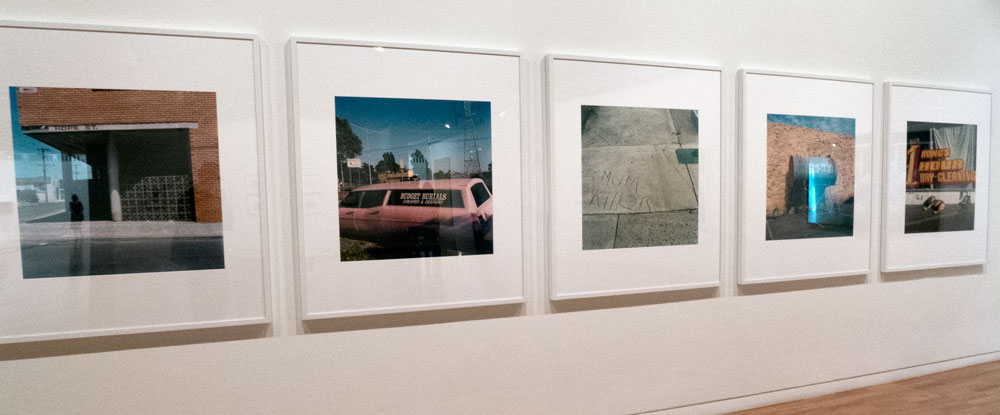
Once again, the Art Gallery of NSW has brought together an interesting exhibition of Australian photography – click here.
This is a must see for anyone with interests in photography. Judy Annear, the curator, has brought some gems from their vast collection.
Variability in terms is a product of government climate
About a decade ago, when some of us were attempting to get the issues of Climate Change to be the basis for the debates on sustainable settlements, it was curious to see the distractions being manufactured in order to avoid taking these debates as comprehensively as they needed to be.
The most ardent opposition to a simple us of language actually came from particular academics who should have been the ones leading the charge to have clear and precise arguments. I suspect that despite their so called concerned views, the overriding pressure was that they were in fact part of large corporations, called universities, that had yet to step up and tackle the then conservative government’s point of views on climate change.
From the Guardian – and article titled:
Big Food is in wilful denial about the harm sugar does to our children
Somewhere on the back seat, a child asks: are we there yet? Is the world safe for me?
The adults present respond: Not Yet. Must be just around the corner.
Continuing hot on the heels of the ‘Angry Summer’ of 2012/2013, Australians again endured record breaking extreme events this summer.
The Climate Council’s report provides a summary of extreme weather conditions in the 2013/2014 summer, illuminating a continuing trend of hotter summers and more weather extremes in Australia.
click here for more on the 2014 Angry Summer Report.
 We should be doing everything we can to ensure leadership positions are available to women. But in the process let’s not forget that some women prefer to plot their world domination quietly.
Click here for a nice article in The Atlantic identifying that we have to do something about linking being bossy and leadership.
a presentation put online by the UK Landscape Institute. Enjoy!

Happy City, Charles Montgomery, 2013
From the blurb online:
“A brilliant, entertaining and vital book. Montgomery deftly leads us from our misplaced focus on money, cars and stuff to consider what makes us truly happy. Then everything changes – the way we live, work and play in humanity’s major habitat, the city.” – David Suzuki
After decades of unchecked sprawl, more people than ever are moving back to the city. Dense urban living has been prescribed as a panacea for the environmental and resource crises of our time. But is it better or worse for our happiness? Are subways, sidewalks and tower dwelling an improvement on the car-dependence of sprawl?
for more on the book – click here – or for a full review – see the article in Metropolis Online – click here
University of Sydney, Macleay Museum
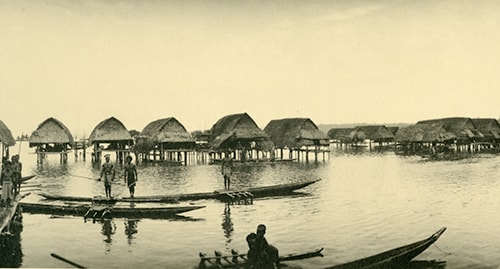
This exhibition is advertised as being of historic photographs from the Pacific spanning a century beginning from the late 1850s. With these words both in advertising and online, the expectations were for an extensive exhibition of photographs of the pacific islands.
 Continuing hot on the heels of the ‘Angry Summer’ of 2012/2013, Australians again endured record breaking extreme events this summer. The Climate Council’s report provides a summary of extreme weather conditions in the 2013/2014 summer, illuminating a continuing trend of hotter summers and more weather extremes in Australia. click on the graphic for more.
a presentation put online by the UK Landscape Institute. Enjoy!
The photographs of architecture of the Post-Soviet era.

There’s a review in WIRED online of a book. To quote: Frank Herfort moved to Moscow with no intention to make a book. Like all photographers, the German-born artist always keeps one eye open for potential subjects, but making a book of architectural photos was never the plan. “While scouting the new city for myself, I began to notice these amazing buildings.”
To quote from the article on The Nature of Cities” : The arguments for an urban Sustainable Development Goal are many. Urbanization has the ability to transform the social and economic fabric of nations and cities are responsible for the bulk of production and consumption worldwide, and are the primary engines of economic growth and development. Roughly three-quarters of global economic activity is urban, and as the urban population grows, so will the urban share of global GDP and investments.
The right to development for low-income and middle-income countries can only be realized through sustainable urbanization that addresses the needs of both rural and urban areas. It must also be recognized that cities are home to extreme deprivation and environmental degradation with one billion people living in slums. In many countries the number of slum dwellers has increased significantly in recent years, and urban inequality is deepening. see the full article here
 In an article from the Guardian, Christiana Figueres speaks optimistically of the effect of the numerous devastating weather events should have on political decision making on how to deal with climate change. Obviously she has not yet learnt that there are people in this world such as those who presently hold the power in Australia on these matters. I am not here referring to the idiots we have in the government, such as the Rabbott, but those who are the real puppet masters.
Nevertheless, I agree with her thrust that this matter is at last moving to another level of government thinking and that maybe now they may take action. Here is the link to the Guardian story – click here
 NGA Garden of the East: photography in Indonesia 1850s–1940s
from the Canberra Times, March 8 2014, comes this review by Sacha Grishin. Click here for the review.
For more on the National Gallery of Australia exhibition – click here. Note that the exhibition is free and runs till 22 June 2014.
 The first story was told to me about a proposal being put to someone’s recent board meeting suggesting that the organisation needed to do far more about the status of women in their particular workforce. That is, along with the business councils in Australia, the organisation could devise some manner by which annually they recognise and award the female achievers.
In a world of inequity, the reactions should not have been so surprising.
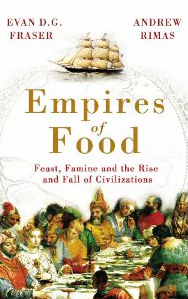 Evan D. G. Fraser and Andrew Rimas. Random House, 2010
As if there was not enough information available on how the world is not paying attention to all the warning signs, this book was recommended to me to make me aware of the dire situation coming our way in relation to the supply of adequate food for coming generations.
This is all linked in with the issues of climate change, population growth and the way we have allowed our food supplies to be controlled by particular market and political forces. This book is a must read for all.
Empires of Food: Feast, Famine and the Rise and Fall of Civilizations
Evan D. G. Fraser and Andrew Rimas. Random House, 2010
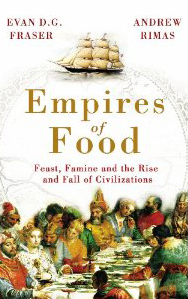 As if there was not enough information available on how the world is not paying attention to all the warning signs, this book was recommended to me to make me aware of the dire situation coming our way in relation to the supply of adequate food for coming generations.
This is all linked in with the issues of climate change, population growth and the way we have allowed our food supplies to be controlled by particular market and political forces. This book is a must read for all.
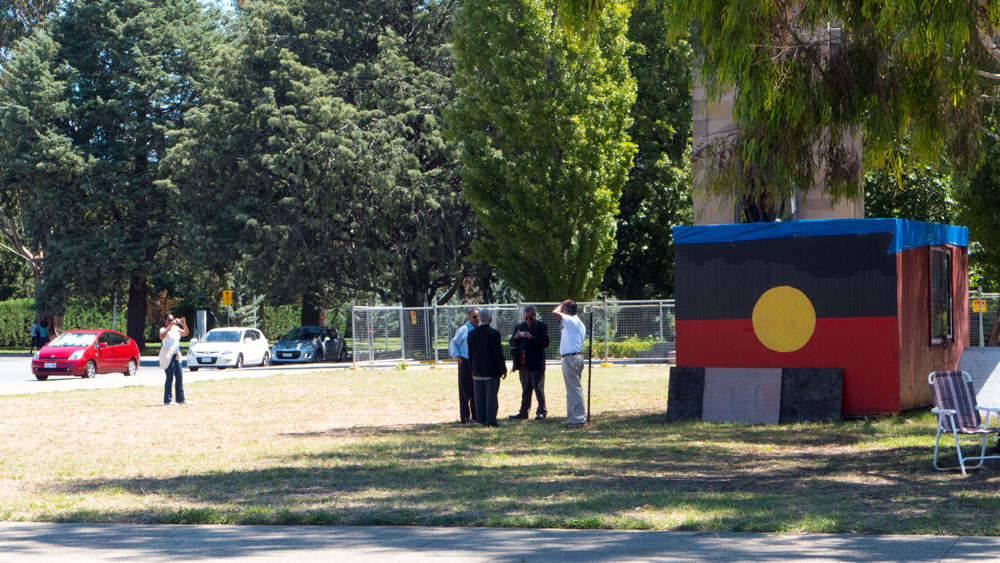
The tent embassy has had a mixed history since the first one was established in January 1972 in Canberra right in front of the former Parliament House. There is a reasonably full history on wikipedia – click here. It is worth reading.
Presently the number of tents varies as does the level of activity. Over the years I am aware that the government as well as the National Capital Authority have had discussions about its future. Nothing has changed except for the comings and goings of the residents.



Many years ago there used to be lots of protest gatherings in Canberra. I am referring to both local and national protests. The local ones used to be regularly held in the place called Civic Square. The national ones were in front of the original Parliament House – now known as the Old Parliament House.
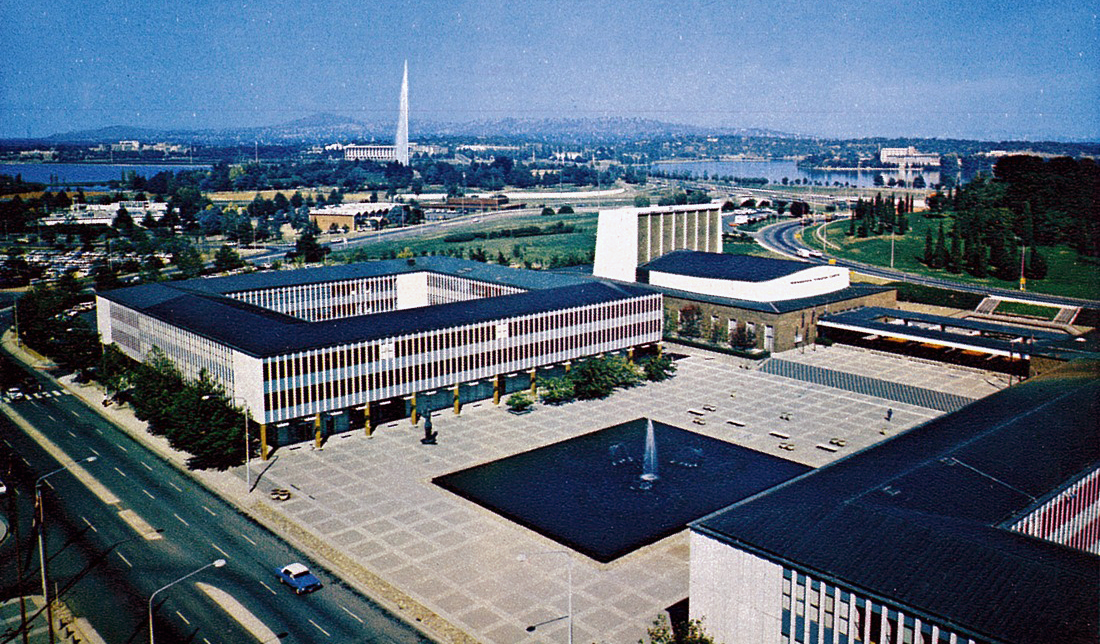 above – the original Civic Square
Such protests are now a rare event. Times have changed even though the political situation is much worse now than then.
 It is unbelievable to think that Australia has a Prime Minister who in 2014 has been quoted as saying that:
“We have quite enough national parks, we have quite enough locked-up forests already. In fact, in an important respect, we have too much locked-up forest.”
This is a link to a review on the online Magazine: Metropolis.
 I was attracted to this as I believe in suburbia but get very annoyed (or is that angry) about the way current planning and development agencies have gone about ruining concept of suburbia through their lack of care for developing sustainable settlements.
This new book is a comprehensive history that rescues the garden suburb from the periphery of urban design, and repositions it at the heart of the debate on cities.
There’s an interesting debate on how we convince people to take action on climate change. This action can be that we vote for the political parties that will follow through on actions, or it could that we all need to take some personal responsibility for climate change and take appropriate actions.
A Sydney GP has an interesting take on this and how we need to use particular words to convince all people.

An article appeared in the Fairfax press on March 1st 2014 under the by-line: A long-lost print has rewritten the story behind one of Australia’s most famous photographs.
Alas, the story was not quite a full representation of the facts!
The IMF has been released that dismisses the ideological argument that redistributing incomes is self-defeating.
 Following on from yesterday’s post on this topic, I have to say I was taken back to see a report from the IMF on the subject of inequity and growth. The paper has backed economists who argue that inequality is a drag on growth in a discussion paper that has also dismissed ideological theories that efforts to redistribute incomes are self-defeating.
Reports from the IMF are usually about driving down the working conditions in order to achieve growth. This IMF report knocks those theories on the head. I am sure it will be ignored by many, in particular the present Australian government. Click here for the article.
Australia is going through strange times right now. The mainstream media and the government are involved in the full time spin of convincing the population that the ‘age of entitlements’ is over. As we are learning, this is correct except if you are deemed to be worthy by the government. This in particular applies to their friends in business. Amongst the business end of town, at least for those in the pockets of government (or is it the other way around), the age of entitlements is well and truly about to be enhanced.
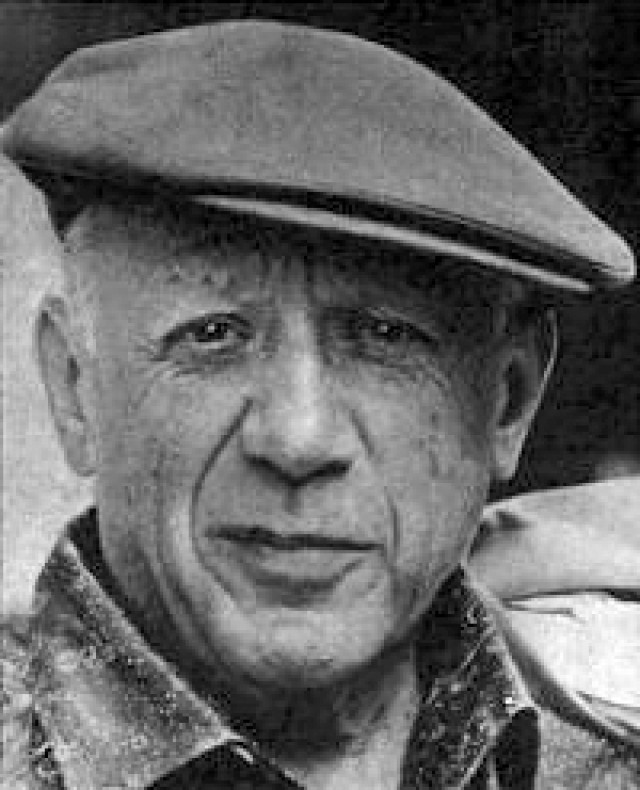 A post on ARTnews talks about the links being made in contemporary visual arts to the work of Pablo Picasso.
I am sure there are many more examples of artists making direct links — or being in conversation with Picasso’s works.
 To be honest I am not so sure given the quality of governments people have voted in. But there are signs within local governments that things may be taken seriously at last.
Check out two posts on Sustainable Settlements Institute.
Reasons for Optimism – click here – & – Clover Moore and the City of Sydney – click here
 I have to admit that having done a lot of reading and been involved in many discussions on climate change and the lack of concerted actions, it was novel to read an article titled: The State of the Debate on Climate Change: Reasons for Optimism.
I do however share the view that any optimism for change is based not on the behaviour and actions of the national or state governments, but on the policies and actions as undertaken by some of the local governments.
 Not many cities in Australia have Lord Mayors who dare to speak out on issues. Sydney has been blessed to have a Lord Mayor who has a national and international profile. The Sydney City Council controls just a small part of the greater metropolitan area. However this has not stopped this local government from being a national leader in dealing with climate change. Within Australia, the Commonwealth and most state governments are well behind in dealing with the urgent climate issues. Leadership in this country, like many others, is coming from local government. On this Sydney is way in front thanks to Clover Moore and her team. This they have achieved despite the reactionary forces from her own state government. There’s a good piece in the Guardian from Clover – click here.
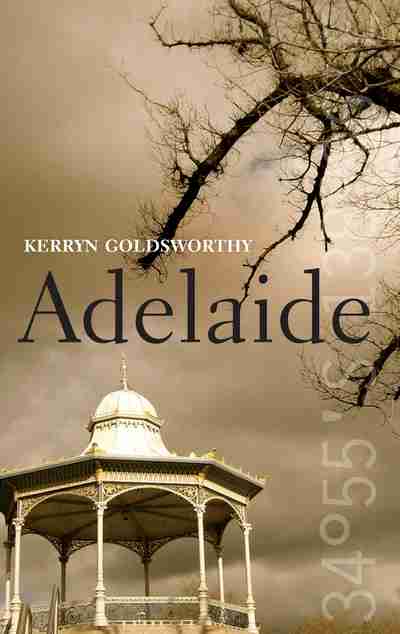 This is another of those smallish book published about Australia’s capital cities. I have already reviewed Hobart, by Peter Timms.
I have to confess that I did not take to the book on Adelaide and at times seriously considered giving up. In the end I had a move quickly through whole sections in order to see where the author was going.
At a conference organized by the National Council on Science and the Environment (NCSE) in Washington, D.C., Diana Ürge-Vorsatz, director of the Center for Climate Change and Sustainable Energy Policy at Central European University, said “spreading today’s best building practices could hold energy costs steady,” but the big question is “how to get the public and private sectors to work together to make transformational change.”
The session then outlined some more problems limiting action on climate change, and the transformational solutions needed to solve them. Interestingly one of the problems first identified was to do with higher education. Another was the decision making processes. There were others such as water and energy wisdom. See the report on this session on The Dirt (ASLA) – click here
 Win A million Dollars – find the solution to this particular water problem
Tulane University is offering a $1 million prize to the team who comes up with the best solution for combating hypoxia-affected waters, the dead zones in the world’s lakes and oceans. Hypoxia is the oxygen depletion in water bodies caused by “excessive amounts of river-borne fertilizers and other nutrients.” Tulane’s grand challenge is a response to President Obama’s call for universities and philanthropies to step up and pursue innovative solutions to our most pressing environmental problems.
—————————————
Paul Costigan, 25 February 2014

We post regular items of interest to this other site. It is a portal for all things climate, sustainability, environments, health and much more to do with how we ensure there are Sustainable Settlements. Click on the image to link to this specialised blog.
 What does it take to bring out even further that narcissist behaviour that occasionally surfaces within social and business interactions? By my reckoning, not much.
I have witnessed that when a certain group in society gains access to any social media, or online forums, or even reply sections online, that with very little encouragement, they quickly plunge headlong into some of the worst troll like and uncivilized behaviour.
There is book review on the Guardian site. This is timely as Australia government goes through all sorts of actions to set the clock back on environmental issues. I dread what chance anyone would have right now of confronting this government over the long-term treatment of our soils, our biodiversity; in fact anything at all to do with nature.
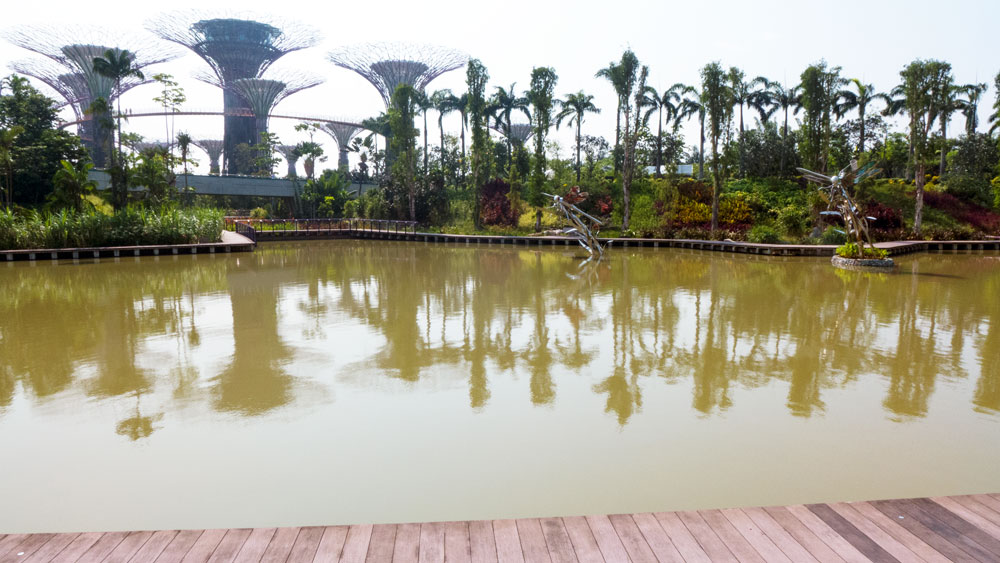
This is a difficult review. I am not as enthusiastic about this major park project as all the reviews I can find online. I am very ware that it has been granted all sorts of awards. Please check award accolades here in the UK Telegraph, and again on this award site.
If you have been to any event lately, you may have observed how people now use their phones to take photographs. This habit of taking a photo before taking something in is not new. What is new is the barrage of camera phones that now appear above any crowd when something is happening. There’s a very telling photograph heading up an article on this in Rolling Stone. Click here for the article.
and I also agree with most of the listed complaints about people’s behaviour at concerts.
The desperate need for frank, honest, timely and evidence based advice.
 Remember how things were during the more optimistic days of living in Australia, when climate change was not a dirty word or two?I am referring to the times of the Kevin Rudd and then Julie Gillard governments.
Back then the country was known internationally as taking a whole raft of initiatives to deal with climate change mitigation and adaptation.
The desperate need for frank, honest, timely and evidence based advice.
Remember how things were during the more optimistic days of living in Australia, when climate change was not a dirty word or two?I am referring to the times of the Kevin Rudd and then Julie Gillard governments.
Back then the country was known internationally as taking a whole raft of initiatives to deal with climate change mitigation and adaptation.
I have to admit that I found the public sector involved in these areas to be under all sorts of pressures. The then government’s priorities kept changing as they worked through what they could and couldn’t do, given the nature of the controls other parties had over the government’s policies.
Things are looking desperate in Australia. The present Rabbott government continues to ignore science and the benefits of policy decisions based on scientific evidence.
The latest example of stupidity is that the Prime Minister has announced a review of the health problems linked to wind farms.
Maybe he, or at least his infamous chief of staff, should learn to read rather than just respond to lobby groups. The media share a lot of responsibility on this issue. Despite the case being closed by scientific evidence that there are no health problems, the media will still take any nut job and allow them equal time in any debate. This keeps the false debates alive.This keeps the case for ‘there remains doubts’ alive.
more news about our friends, the Banks!

Amongst the news items in the last week was the report on the enormous profits by Australia’s Commonwealth Bank. This one slipped through while the media was taken up with all the usual superficial distractions.
Referring to a posting on The Nature of Cities: Involving Children in the Design of Park Renovations to Create Green Places for Play with Urban Nature
Locally there have been several wonderful initiatives that have delivered wetlands to local neighbourhoods. These developments were very much welcomed and have become destination for people taking walks.
The new wetlands were primarily established to become catchments for run off water that had previously been channeled into 1960s concrete drains straight down through the suburbs into the lake. Water is now being partially diverted along the way to provide storage as well as being piped off site to other large water tanks for other irrigation purposes.
There are may time as a citizen, that one despairs that any government is really going to Get Real about climate change.
This is more frustrating because as we all know that they have at their finger tips all the advice and scientific information necessary for intelligent and timely decisions. Yet for so many governments, it is business as usual.
There are may time as a citizen, that one despairs that any government is really going to Get Real about climate change. This is more frustrating because as we all know that they have at their finger tips all the advice and scientific information necessary for intelligent and timely decisions. Yet for so many governments, it is business as usual.
According to an article just published, the State of Victorian has an agency that is prepared to offer frank advice about the crucial steps we all need to take as a nation. It has listed the top challenges for Australia. In their simplest form, they are:
 It is definitely time for political leaders and other voices to take the issues of climate change up to the mainstream media and the bunch of nut jobs who we politely call climate deniers.
The United States President and the White House team have been unable to deliver on its climate and environmental agendas due to the emasculation of anything sensible by the legislators. This should not stop any or all of them making more leadership statements to encourage the rest of the world and their own state governments to get on with dealing with the enormous challenges.
It is definitely time for political leaders and other voices to take the issues of climate change up to the mainstream media and the bunch of nut jobs who we politely call climate deniers.
The United States President and the White House team have been unable to deliver on its climate and environmental agendas due to the emasculation of anything sensible by the legislators.
This should not stop any or all of them making more leadership statements to encourage the rest of the world and their own state governments to get on with dealing with the enormous challenges.
While the predictions forecast an increase in temperatures and a drier climate for places such as most of Australia, especially in the South East, the same predictions forecast much wetter conditions in countries in the north, such as the UK.
While the former predictions are starting to be fulfilled, the latter for the UK is now being questioned. That is, not whether they are true, but whether climate change has already affected the weather in the UK.
With the massive flooding now underway and more expected, these questions are being asked and answered by the scientists within their bureau of meteorology.