Category Archives: climate change

Advocacy and research to achieve resilient, engaging and healthy settlements

all that green-wash

How those carbon offsets can do more environmental harm than good
q3gx4hds-1401170769Beware of all that green-wash.
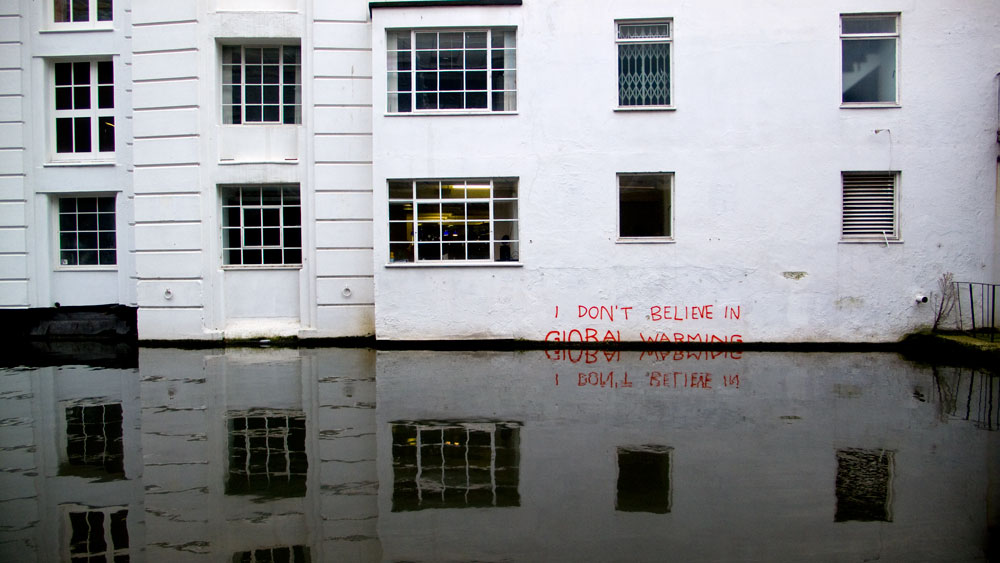
Yet again there’s a nice piece on The Conversation about how we need to be far more serious about carbon. It also points towards the use of Green-Wash by corporations to allow them to continue with business as usual.

I have commented on this on our other blog – The Sustainable Settlements Institute – click here

Urban Agriculture

 Urban Agriculture – one part of the solution

from The Guardian, Designing cities and factories with urban agriculture in mind. The Netherlands offers inspiration for designers looking to create environments that harvest water, energy and nutrients.

Urban farms are transforming inner city spaces – rooftops, infrastructure, streetscapes, building skin – into generative ecologies that support the lives of people, and pollinators too. They are bringing into cities, and into plain view, the natural systems that sustain urban life

click here

Car Parking

Using Parking Meters in Climate Change


parkingmadridThere are all sorts of stories in circulation in Canberra as a result of the decision to introduce paid parking for all areas within the Parliamentary Triangle. This has a big impact on those who work in the area. Some public servants are devising clever tricks to continue to have free parking.

This will also mean that visitors will now have to pay to visit the national institutions and have limited time to visit. This could be a marked change in how visitors regard the national cultural institutions. I know as a local, it will mean less visits to these institutions.

Continue reading Car Parking

Big Coal Stumbles

Big Coal Chief has brawn but no brains


The same crowd that managed to assist in bringing down the Rudd Labor government when the government proposed a tax on the riches being ripped out of the country, have just introduced an online promotion to bring together those in favour of Big Coal and its future.

Sadly for Big Coal have entered the democratic world of online chats and twitter. The full story is told in the Guardian – click here. Enjoy and chuckle at the expense of the not so bright chiefs of Big Coal.

solar power

Rooftop solar and Australian politics

There’s evidence appearing about the take up of solar may in fact continue to expand and become fully part of the country’s source of electricity. This is amazing given the on-going vicious and well-funded campaigns being carried by Big Coal and their allies in the present Australian Government.

The next big trick is to get solar to be a key issue at the coming elections, both state and federal. With many of the subsidies now being removed, those who have solar are starting to notice how they are being duded by the Big Coal electricity companies who do not want solar to succeed.

There’s a very good article online titled: Rooftop solar may be ‘sleeping giant’ of Australian politics – click here. It is worth a read to gain an update on this debate and some facts on the current rip offs underway.

———————————

Paul Costigan 14 April 2014


Climate inAction

About climate action – or climate inaction

A piece from the New Yorker that again points out that the time for action on climate change is now but that inaction has actually become the norm. So many politicians have come to office on the back of statements on climate change, yet here we are in 2014 with no significant actions being undertaken to realistically deal with climate change.

The really sad part is, as pointed out in the article, the longer we allow our national governments to sit on their hands, then the harder it will be in the coming years as the problems will have worsened and become far more difficult to deal with. It seems we are all waiting for someone else to solve this problem.

Eventually of course, someone or at least something  will. That will be the planet that rejects the dangerous race called humans.

Here’s the link to the New Yorker article – click here


Food Security

Australia needs to listen to the warnings about its food security.

From the Independent Australia Blog comes the warning about food security.

The latest report from the United Nations Intergovernmental Panel on Climate Change paints a grim picture for the future of Australia’s food security.

Food security is an issue that must be carefully and comprehensively addressed by our government as a matter of critical forward planning. And it must be given priority over trade “arrangements” that may have attractions now, but which will limit the government’s policy options when current circumstances change, which all indicators point to being soon.

Continue reading Food Security

Sustainable Cities

World Urban Forum Highlights Opportunities for Sustainable Cities

In a blog on the Huffington Post, the authors point out the obvious. That is, obvious to those who are looking and care as opposed to too many who are presently making decisions about cities and sustainability.

The evidence is there.  Design well and all the benefits can follow. Design badly, which is too common, and all the inequities and unsustainable practices come to the fore. As the authors say:

Well-designed cities generate jobs, innovation, and economic growth for all. But when designed poorly — with too much sprawl, waste, and inefficiency — they can divide cities and exacerbate pollution, inequality, and political instability. Moreover, poor design has long-term consequences given that urban infrastructure often lasts decades. Continue reading Sustainable Cities

Los Angeles in 2033

From The Huffington Post

The Huffington Post presents a wonderfully optimistic report about a city that is often regarded as being a terrible example of urban development. I disagree. It has many things wrong with it but if you spend time there you can see that there are some really great things happening. All cities have their problems and many do not much to boast about.

Continue reading Los Angeles in 2033

Media and Climate Confusion

The role of the Media in confusion over climate change action

As reported many times, the current mainstream media has become part of the problem in encouraging the world to act urgently on climate change.

In Australia it has become painfully obvious that media, such as our own ABC, has gone far too far in providing what they term as ‘balance’. The voices of the scientists and the weight of their reports and the mountains of evidence is ‘balanced’ by the time given to complete skeptics and their lack of scientific evidence.

Continue reading Media and Climate Confusion

wetlands

Comment: Wetlands and Climate Change Adaptation

wetlands-P1030438

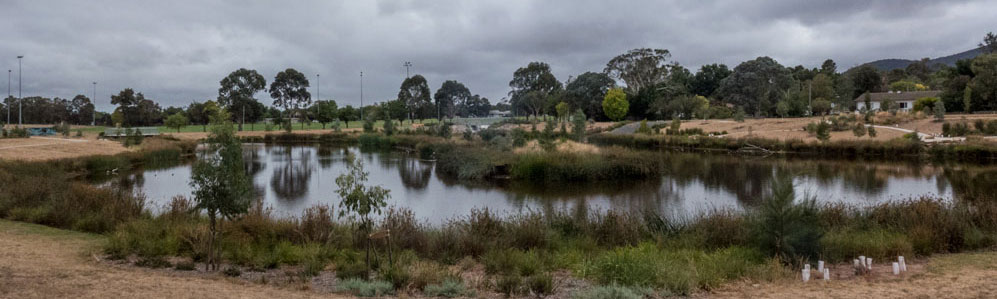
Australia has a very mixed understanding and relationship with wetlands. I happen to be fortunate to live close to one. This came into existence just a couple of years ago when the local government transformed a disused and degraded parkland into a wetland attached to an old style concrete drain.

Continue reading wetlands

LA in 2033

From The Huffington Post

The Huffington Post presents a wonderfully optimistic report about a city that is often regarded as being a terrible example of urban development. I disagree. It has many things wrong with it but if you spend time there you can see that there are some really great things happening. All cities have their problems and many do not much to boast about.

Continue reading LA in 2033

wetlands

 Comment: Wetlands and Climate Change Adaptation

Australia has a very mixed understanding and relationship with wetlands. I happen to be fortunate to live close to one. This came into existence just a couple of years ago when the local government transformed a disused and degraded parkland into a wetland attached to an old style concrete drain.

This wetland was part of a series of several wetlands installed into the inner northern suburbs of Canberra. Our hope is that one day the same local government will take on the challenge of enlarging the nearby wetlands to include much of the concrete drains through the inner northern suburbs. This would then be then be a linear park and wetland that would wind its way through several suburbs and increase the amount of green infrastructure. It would also be a wonderful walkway and increase the chances of locals getting out and walking.

Continue reading wetlands

Climate and Soils

Soil as Carbon Storehouse:  New Weapon in Climate Fight?

From environment360, by judith d. schwartz

The degradation of soils from unsustainable agriculture and other development has released billions of tons of carbon into the atmosphere. But new research shows how effective land restoration could play a major role in sequestering CO2 and slowing climate change.

Soils of the world must be part of any agenda to address climate change, as well as food and water security. There is now a general awareness of soil carbon, an awareness that soil isn’t just a medium for plant growth.

click here for the full article


Technology and Conservation

How Technology Is Transforming Conservation

from the online – Foreign Affairs, April 2014

Conservation is for the first time beginning to operate at the pace and on the scale necessary to keep up with, and even get ahead of, the planet’s most intractable environmental challenges. New technologies have given conservationists abilities that would have seemed like super powers just a few years ago.

Continue reading Technology and Conservation

Climate Change

Report from the IPCC

rabbitt01Dear Sir Rabbott: The latest IPCC report predicts future food and water supply insecurities, calls for both mitigation and adaptation. No further information is necessary – it is all in the reports – please read them and bring Australia’s national action on climate change into the 20th (and then maybe the 21st) century.

The Guardian – click here – or – The UK Independent – click here

global system unravel

industrial civilisation headed for irreversible collapse

global system unravel

The evidence is out there. “A new study sponsored by Nasa’s Goddard Space Flight Center has highlighted the prospect that global industrial civilisation could collapse in coming decades due to unsustainable resource exploitation and increasingly unequal wealth distribution.”

Yet governments continue to play down the message in order for short term political gain. The article is definitely worth a read, not to become alarmed, but to become more informed of the need to rethink the way we do business. click here.

Green Roofs

Green Roofs and Urban Design

I remain skeptical about all the hype around green roofs and green walls. This is not to say that when delivered comprehensively, that green roofs can be very effective in reducing temperatures of the buildings. It is more that so many of the current crop of green roofs and green walls are token add-ons.

Despite the hype by the building companies and their contractors about how wonderful particular green walls and roofs are, many are superficial and deliver very limited benefit, if any. When done properly, a green roof can be a contributor to the green infrastructure of urban areas.

Continue reading Green Roofs

Watching the World Change

PBS deals with the Big Coal myths

PBS dives headfirst into the myth of clean coal and pretty much tears it apart using something we don’t often see these days when it come US energy issues: facts. And the most complete take-down of “clean coal” in the segment came from the CEO of the second largest coal electricity company in the US.

see the report on the program (not available online to Australia) through the web site – Coal is Dirty – click here.


Climate Terminology

Climate Change Terminology

It’s all in the words we use

Variability in terms is a product of government climate

About a decade ago, when some of us were attempting to get the issues of Climate Change to be the basis for the debates on sustainable settlements, it was curious to see the distractions being manufactured in order to avoid taking these debates as comprehensively as they needed to be.

The most ardent opposition to a simple us of language actually came from particular academics who should have been the ones leading the charge to have clear and precise arguments. I suspect that despite their so called concerned views, the overriding pressure was that they were in fact part of large corporations, called universities, that had yet to step up and tackle the then conservative government’s point of views on climate change.

Continue reading Climate Terminology

Climate Council Report

Climate Council Report: The Angry Summer

Continuing hot on the heels of the ‘Angry Summer’ of 2012/2013, Australians again endured record breaking extreme events this summer.

The Climate Council’s report provides a summary of extreme weather conditions in the 2013/2014 summer, illuminating a continuing trend of hotter summers and more weather extremes in Australia.

click here for more on the 2014 Angry Summer Report.

Climate Council

Report: The Angry Summer

ba9e755e8d612a34ae915d28114d8f1fContinuing hot on the heels of the ‘Angry Summer’ of 2012/2013, Australians again endured record breaking extreme events this summer. The Climate Council’s report provides a summary of extreme weather conditions in the 2013/2014 summer, illuminating a continuing trend of hotter summers and more weather extremes in Australia. click on the graphic for more.

Urban Sustainable Development Goal

Why We Need an Urban Sustainable Development Goal

To quote from the article on The Nature of Cities” : The arguments for an urban Sustainable Development Goal are many. Urbanization has the ability to transform the social and economic fabric of nations and cities are responsible for the bulk of production and consumption worldwide, and are the primary engines of economic growth and development. Roughly three-quarters of global economic activity is urban, and as the urban population grows, so will the urban share of global GDP and investments.

The right to development for low-income and middle-income countries can only be realized through sustainable urbanization that addresses the needs of both rural and urban areas. It must also be recognized that cities are home to extreme deprivation and environmental degradation with one billion people living in slums. In many countries the number of slum dwellers has increased significantly in recent years, and urban inequality is deepening.  see the full article here


climate action

Extreme weather is ‘silver lining’ for climate action

rabbott01In an article from the Guardian, Christiana Figueres speaks optimistically of the effect of the numerous devastating weather events should have on political decision making on how to deal with climate change. Obviously she has not yet learnt that there are people in this world such as those who presently hold the power in Australia on these matters. I am not here referring to the idiots we have in the government, such as the Rabbott, but those who are the real puppet masters.

Nevertheless, I agree with her thrust that this matter is at last moving to another level of government thinking and that maybe now they may take action. Here is the link to the Guardian story – click here

Empires of Food

Book Review

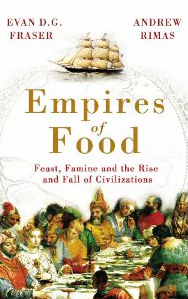
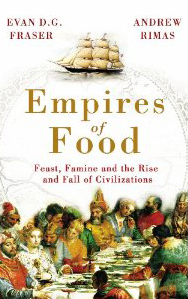
Empires of Food: Feast, Famine and the Rise and Fall of Civilizations

empiresoffoodEvan D. G. Fraser and Andrew Rimas.  Random House, 2010

As if there was not enough information available on how the world is not paying attention to all the warning signs, this book was recommended to me to make me aware of the dire situation coming our way in relation to the supply of adequate food for coming generations.

This is all linked in with the issues of climate change, population growth and the way we have allowed our food supplies to be controlled by particular market and political forces. This book is a must read for all.


Continue reading Empires of Food

Empires of Food

Review: Book

Empires of Food: Feast, Famine and the Rise and Fall of Civilizations

Evan D. G. Fraser and Andrew Rimas.  Random House, 2010

empiresoffoodAs if there was not enough information available on how the world is not paying attention to all the warning signs, this book was recommended to me to make me aware of the dire situation coming our way in relation to the supply of adequate food for coming generations.

This is all linked in with the issues of climate change, population growth and the way we have allowed our food supplies to be controlled by particular market and political forces. This book is a must read for all.

Continue reading Empires of Food

Suburbia

Book Review: The Charms of Suburbia

This is a link to a review on the online Magazine: Metropolis.

Paradise-PlannedI was attracted to this as I believe in suburbia but get very annoyed (or is that angry) about the way current planning and development agencies have gone about ruining concept of suburbia through their lack of care for developing sustainable settlements.

This new book is a comprehensive history that rescues the garden suburb from the periphery of urban design, and repositions it at the heart of the debate on cities.


Continue reading Suburbia

Climate and Equity

Climate and Equity

There’s an interesting debate on how we convince people to take action on climate change. This action can be that we vote for the political parties that will follow through on actions, or it could that we all need to take some personal responsibility for climate change and take appropriate actions.

A Sydney GP has an interesting take on this and how we need to use particular words to convince all people.

Continue reading Climate and Equity

Reasons for Optimism

The State of the Debate on Climate Change

Reasons for Optimism

Old Colony_tcm3-34346I have to admit that having done a lot of reading and been involved in many discussions on climate change and the lack of concerted actions, it was novel to read an article titled: The State of the Debate on Climate Change: Reasons for Optimism.

I do however share the view that any optimism for change is based not on the behaviour and actions of the national or state governments, but on the policies and actions as undertaken by some of the local governments.

Continue reading Reasons for Optimism

Sydney and Climate Change

Sydney and Climate Change

The Lord Mayor speaks on Climate Change

cloverNot many cities in Australia have Lord Mayors who dare to speak out on issues. Sydney has been blessed to have a Lord Mayor who has a national and international profile. The Sydney City Council controls just a small part of the greater metropolitan area. However this has not stopped this local government from being a national leader in dealing with climate change. Within Australia, the Commonwealth and most state governments are well behind in dealing with the urgent climate issues. Leadership in this country, like many others, is coming from local government. On this Sydney is way in front thanks to Clover Moore and her team. This they have achieved despite the reactionary forces from her own state government. There’s a good piece in the Guardian from Clover – click here.

The State of the Debate on Climate Change

The State of the Debate on Climate Change:

Transformational Change Needed

At a conference organized by the National Council on Science and the Environment (NCSE) in Washington, D.C., Diana Ürge-Vorsatz, director of the Center for Climate Change and Sustainable Energy Policy at Central European University, said “spreading today’s best building practices could hold energy costs steady,” but the big question is “how to get the public and private sectors to work together to make transformational change.”

The session then outlined some more problems limiting action on climate change, and the transformational solutions needed to solve them. Interestingly one of the problems first identified was to do with higher education. Another was the decision making processes. There were others such as water and energy wisdom. See the report on this session on The Dirt (ASLA) – click here

Water Competition

Notice: Water Competition

tulaneWin A million Dollars – find the solution to this particular water problem

Tulane University is offering a $1 million prize to the team who comes up with the best solution for combating hypoxia-affected waters, the dead zones in the world’s lakes and oceans. Hypoxia is the oxygen depletion in water bodies caused by “excessive amounts of river-borne fertilizers and other nutrients.” Tulane’s grand challenge is a response to President Obama’s call for universities and philanthropies to step up and pursue innovative solutions to our most pressing environmental problems.

click here for the details

—————————————

Paul Costigan, 25 February 2014

Soils

Book Review (re-posted): Soils

What Has Nature Ever Done for Us

There is book review on the Guardian site. This is timely as Australia government goes through all sorts of actions to set the clock back on environmental issues. I dread what chance anyone would have right now of confronting this government over the long-term treatment of our soils, our biodiversity; in fact anything at all to do with nature.

Continue reading Soils

climate’s dark art

dealing with climate’s dark art

The desperate need for frank, honest, timely and evidence based advice.


max-P1020481Remember how things were during the more optimistic days of living in Australia, when climate change was not a dirty word or two?I am referring to the times of the Kevin Rudd and then Julie Gillard governments.

Back then the country was known internationally as taking a whole raft of initiatives to deal with climate change mitigation and adaptation.

Continue reading climate’s dark art

climate dark art

climate dark art

The desperate need for frank, honest, timely and evidence based advice.


max-P1020481Remember how things were during the more optimistic days of living in Australia, when climate change was not a dirty word or two?I am referring to the times of the Kevin Rudd and then Julie Gillard governments.

Back then the country was known internationally as taking a whole raft of initiatives to deal with climate change mitigation and adaptation.

I have to admit that I found the public sector involved in these areas to be under all sorts of pressures. The then government’s priorities kept changing as they worked through what they could and couldn’t do, given the nature of the controls other parties had over the government’s policies.

Continue reading climate dark art

Wind Farm

Wind Farms

The truth is out there!

rabbott01Things are looking desperate in Australia. The present Rabbott government continues to ignore science and the benefits of policy decisions based on scientific evidence.

The latest example of stupidity is that the Prime Minister has announced a review of the health problems linked to wind farms.

Maybe he, or at least his infamous chief of staff, should learn to read rather than just respond to lobby groups. The media share a lot of responsibility on this issue. Despite the case being closed by scientific evidence that there are no health problems, the media will still take any nut job and allow them equal time in any debate. This keeps the false debates alive.This keeps the case for ‘there remains doubts’ alive.

Continue reading Wind Farm

Get Real on Climate Change

Definitely time to Get Real about Climate Change

There are may time as a citizen, that one despairs that any government is really going to Get Real about climate change.

climatechange_640x200_

This is more frustrating because as we all know that they have at their finger tips all the advice and scientific information necessary for intelligent and timely decisions. Yet for so many governments, it is business as usual.

Continue reading Get Real on Climate Change

Get Real

Get Real about Climate Change

There are may time as a citizen, that one despairs that any government is really going to Get Real about climate change. This is more frustrating because as we all know that they have at their finger tips all the advice and scientific information necessary for intelligent and timely decisions. Yet for so many governments, it is business as usual.

According to an article just published, the State of Victorian has an agency that is prepared to offer frank advice about the crucial steps we all need to take as a nation. It has listed the top challenges for Australia. In their simplest form, they are:

  1. Getting off coal
  2. Getting on to renewables
  3. Ending fossil fuel subsidies
  4. Stop facilitating the emissions of others
  5. Get ready

Continue reading Get Real

Climate Change voices

Comment: More Climate Change Voices required

It is definitely time for political leaders and other voices to take the issues of climate change up to the mainstream media and the bunch of nut jobs who we politely call climate deniers.
The United States President and the White House team have been unable to deliver on its climate and environmental agendas due to the emasculation of anything sensible by the legislators. This should not stop any or all of them making more leadership statements to encourage the rest of the world and their own state governments to get on with dealing with the enormous challenges.

Continue reading Climate Change voices

Climate Change Voices

Comment: More Climate Change Voices required


It is definitely time for political leaders and other voices to take the issues of climate change up to the mainstream media and the bunch of nut jobs who we politely call climate deniers.
The United States President and the White House team have been unable to deliver on its climate and environmental agendas due to the emasculation of anything sensible by the legislators.

This should not stop any or all of them making more leadership statements to encourage the rest of the world and their own state governments to get on with dealing with the enormous challenges.

Continue reading Climate Change Voices

Climate Change Flooding

Climate Change Flooding in the UK

While the predictions forecast an increase in temperatures and a drier climate for places such as most of Australia, especially in the South East, the same predictions forecast much wetter conditions in countries in the north, such as the UK.

While the former predictions are starting to be fulfilled, the latter for the UK is now being questioned. That is, not whether they are true, but whether climate change has already affected the weather in the UK.

With the massive flooding now underway and more expected, these questions are being asked and answered by the scientists within their bureau of meteorology.

Continue reading Climate Change Flooding

Cities and Biodiversity

Cities and Biodiversity

There’s a short presentation online that introduces the benefits and urgency for all countries to do more for Cities and Biodiversity. The presenters have some key messages on their web site.

Key Messages for Cities and Biodiversity Continue reading Cities and Biodiversity

urban ecology

urban ecology

re-posted article: What are the social justice implications of urban ecology, and how can we make sure that “green cities” are not synonymous with “gentrified” or “exclusive” cities?

Here is Australia there is a lot of talk amongst city planners and such that there is a need for green cities, sustainable cities and lots more simplistic terms. It is very hard indeed to find amongst the rhetoric any realistic commitment to urban ecology.

The need to base all urban developments against a measure based around preserving and enhancing the soil, the ecology and the green infrastructure remains an optimistic wish for those interested in the survival of the planet. Current approaches to urban design and planning are still very much ‘business as usual’ with market forces, meaning the quick dollar, as the drivers and measures applied.

Continue reading urban ecology

Wind Farm Refugees

Wind Farm Refugees

re-post from The Drum on the ABC

rabbott01If you have paid any attention to the wind farm debates within Australia, two names surface. One is the Waubra Foundation, and the other is their leader, Sarah Laurie. The town of Waubra has had its name used by this so-called foundation, even though it has requested that they cease using their town’s name in this campaign. As for Sarah Laurie, there have been numerous articles exposing her claims. Today there is another researcher who calls into question the claim that people have become refugees of the wind farms as they have had to leave their properties to get away from the harm caused by the wind farms.

Continue reading Wind Farm Refugees

Canberra and climate change

The city of Canberra and climate change

Re-posted from the Canberra Times

There are times here in the City of Canberra when one despairs at the actions of the planning authority in its spin about how it goes about the planning, design and redevelopment of Canberra’s suburbs. In short: It is shocking!

The authority uses all sorts of green wash in its spin. The planners within the authority still favour the so called market forces to translate their lose planning requirements to deliver what the local developers consider as adequate for residents. This means an extremely artificial nod to the urgent climate change adaptation issues that are impacting on our urban environments. Say no more.

Continue reading Canberra and climate change

Lawns of Kingston

Opinion: the Lawns of Kingston return

Beware politicians and designers: We love our Lawns

Kingston-GrnSq-P1010961

In a previous post I had spoken of Australia’s love of the lawn. (click here)

In particular I mentioned a local battle over Green Square at the Kingston Shops in Canberra whereby the local government had replaced a green square of lawn with a designed space,  complete with brick walls and seating and drought friendly, low maintenance plants.

Continue reading Lawns of Kingston

Edible City

Advocacy: Edible City

A presentation: Turn your city to being an edible city

Developed by the American Society of Landscape Architects, this presentation will assist advocacy to deal with the forecasted food shortages as climate change kicks in. The presentation demonstrates how to turn a conventional community into an edible city. Learn how to transform unproductive spaces into agricultural landscapes that help fight obesity and reduce food deserts. Make sure you note the address and send it onto anyone in decision making roles.

Continue reading Edible City

Revitalizing Cities with Parks

Advocacy: Sustainable Landscapes – Revitalizing Cities with Parks

Developed by the American Society of Landscape Architects, this presentation should assist anyone with their advocacy for Revitalizing Cities with Parks. In these times of reactionary governments and tight budgets, it is important to maintain efforts to introduce the simple idea to create more parks.

Continue reading Revitalizing Cities with Parks

Drought

Opinion: It is hot!
Drought

I am writing this while the temperature outside is about 38 degrees Celsius. It is hot and dry in SE Australia and has been for weeks and it may be this way for a couple of weeks to come.

Australia had its 10 year drought and now the yearly temperatures have settled down to being the hottest on record. And it just keeps on being hot and dry. Yet the government does not think it there is anything to worry about.

Continue reading Drought

Leadership in Design

Leadership in design of the built environment

watson-House-P1030003I was attending a meeting of combined community council two years ago, when to members of the public who were in attendance made very similar appeals. Both were very upset with the quality of the redevelopments that had appeared within their street, despite the local communities objections about key aspects of the developments.

As far as I could ascertain, they were not necessarily opposed to the infill of their suburb. It was more about the nature of the apartments being built.

Continue reading Leadership in Design

Leadership in Design

Leadership in design of the built environment

watson-House-P1030003 I was attending a meeting of combined community council two years ago, when to members of the public who were in attendance made very similar appeals. Both were very upset with the quality of the redevelopments that had appeared within their street, despite the local communities objections about key aspects of the developments.

As far as I could ascertain, they were not necessarily opposed to the infill of their suburb. It was more about the nature of the apartments being built.

Continue reading Leadership in Design

Urban Forests

Advocacy: Urban Forests

A presentation: Urban Forests = Cleaner, Cooler Air

Developed by the American Society of Landscape Architects, this presentation will assist advocacy for more resource allocation for urban forests. Governments need to deal with climate change in the urban areas, and dealing with urban forests is a good place to concentrate some resources. The urban forest issues are linked to the population’s health and wellbeing and avoiding heat island effects.

Continue reading Urban Forests

Leadership

Leadership

Online Presentation: The Best Planned City: Olmsted, Vaux, and the Buffalo Park System

Despite all the evidence and all the advocacy, our political leaders are still not up to the challenge of dealing with something that is a threat to life as we have come to know it here on this planet. True leadership seems to be in short supply these days.

There are a host of professions that could be showing much greater leadership. Many have learnt to be spin doctors and have filled pages with their commitments and their policies. All this is very nice and very polite.

Continue reading Leadership

climate change and cold weather

Research: climate change and cold weather

Public perception of cold weather events as evidence for and against climate change

A paper has been posted online by Stuart Bryce Capstick and Nicholas Frank Pidgeon. The Abstract reads:

It has been argued that public doubts about climate change have been exacerbated by cold weather events seen as a form of disconfirming evidence for anticipated ‘warming’. Although a link between perceptions of climate and weather is well-established, such assumptions have not been empirically tested. Here we show, using nationally representative data, that directly following a period of severe cold weather in the UK, three times as many people saw these events as pointing towards the reality of climate change, than as disconfirming it.

Continue reading climate change and cold weather

Big Road Projects

Big road projects don’t really save time or boost productivity?

from the Conversation, 24 Jan 2014

With the Rabbott government expressing support for large infrastructure projects in the shape of more big roads, there is the absence of any sense of what some these projects do to local communities. Let’s not also consider how roads encourage more traffic, that is more cars, that is more use of petrol, that is less use of any form of public transport and other more sustainable transport – such as walking.

The New South Wales and Victorian governments have recently released business cases for their pet motorway projects, WestConnex in Sydney and East-West Link in Melbourne. But will these big road projects, costing a combined A$20 billion (with A$3 billion being donated by the federal government), really generate the economic benefits promised? Read the full piece from The Conversation – click here

Australia’s climate plan

Australia’s climate plan: are you serious?

rabbott01We live in strange times. The former Australian Government had developed an international reputation for being in the business of looking after its people, of caring for the environment and for careful financial management.

The new Rabbott government is establishing itself as far more interested in the short term aim of providing for those who assisted it into power. This means handing decisions on social, financial and environmental issues back to the business lobby groups. This is the new version of government taking a back seat and allowing business to drive the agenda. In many cases, this means the business lobby groups are having government wind back programs, especially on any issues dealing with the environment. There’s a good piece in The Conversation on the attitude taken by this government to addressing climate change.

“Reverting to fossil fuels, phasing out of renewable energy incentives and increasing deforestation levels to accommodate expanding agriculture explains most of this. Which begs the question of Australia’s government: are you serious?” read the full article here.


Big Coal

Big Coal: It’s time to celebrate (or not) Australia Day
meanwhile people in North West NSW, continue to battle Big Coal.


From the Guardian (Friday 24 January): ; an article by Phil Laird.

9833f4cd-5e93-4db0-9d04-d5bb6bd07f9e-460x276Protest at Maules Creek. Photograph: Kate Ausburn

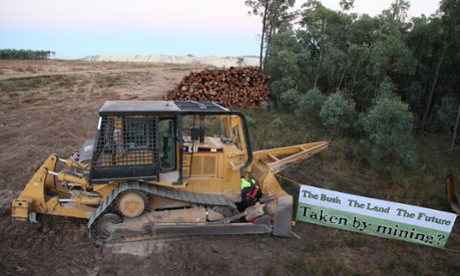
This Australia day, us underdogs will fight Big Coal to save Maules Creek. In the battle that is gripping my community, my fifth generation farming family and I are siding with traditional owners and environmentalists against miners to save the land we love.

Continue reading Big Coal

Big Coal

Big Coal: It’s time to celebrate (or not) Australia Day

meanwhile people in North West NSW, continue to battle Big Coal.

From the Guardian (Friday 24 January): This Australia day, us underdogs will fight Big Coal to save Maules Creek. In the battle that is gripping my community, my fifth generation farming family and I are siding with traditional owners and environmentalists against miners to save the land we love; an article by Phil Laird.

This Australia Day, many of us will gather to reflect on and celebrate what’s great about our democracy. It’s our good fortune as a nation to be blessed with abundant natural resources that are our common wealth. Our fertile land, clean air and water underpin our country’s agricultural heritage, which has fed and clothed us. Australia’s native wildlife is unique, and the bush where Australians walk, fish, hunt and camp is habitat for the animals that are emblems of the country itself. Traditional owners of the country have the longest continuing culture in the world, and a connection to the bush that goes back tens of thousands of years. click here for the Guardian Article


Banks and Climate Change

re-post from ACF website
Banks and Climate Change

In a piece by Ian Lowe, President of the Australian Conservation Foundation, he speaks of the links the ANZ Bank has to climate change. Apparently the bank makes big loans to coal export companies.

This link between bank (and many other organisations) is explored in Guy Pearse’s book Greenwash.

Continue reading Banks and Climate Change

Trees and Carbon

Big old trees grow faster, making them vital carbon absorber

from the Conversation ( where would we be without The Conversation?)

botgrdn-P1020238The linked article has ramifications for the current forest management methods and choices about what to log or not. The piece also reminds us all of the importance of all trees, not only for shade and green infrastructure benefits, but also as carbon sinks.

While becoming carbon neutral must be the top priority, it remains that trees are part of the adaptation processes of dealing with some of the carbon in our atmosphere. This points to the need to increase our urban forests and to ensure that new developments include more than adequate trees to deal with heat island effects, to provide for increase health and wellbeing and to be part of city-wide urban carbon sinks.

Continue reading Trees and Carbon

Be Afraid, Be Very Afraid

Opinion:
Be Afraid, be Very Afraid of balance as provided by the ABC

cimate

Once upon a time I was a rusted on ABC (Australian Broadcasting Corporation) watcher. I relied on the ABC, and SBS, for most of my news and current affairs.

Over time as a reaction to the style of gotcha journalism that became the norm on the ABC, radio and TV, I started watching less and less. Today as the result of this quiet reduction in watching and listening to the ABC, I have found that I now routinely do not watch or listen to the ABC.

Continue reading Be Afraid, Be Very Afraid

Urbanism, Climate Adaptation and Health

Reporting on research being undertaken

Urbanism, Climate Adaptation and Health

You are urged to ‘watch this space’ for research and reports by scientists who have been carrying out research on Urbanism, Climate Adaptation and Health. To quote from their website:

Safeguarding future health in Australian cities, The CSIRO Climate Adaptation Flagship has funded scientists and researchers from a range of disciplines to develop adaptation strategies which will improve the health of urban populations in the face of a variable and changing climate.

The Urbanism, Climate Adaptation and Health Cluster was established in 2010 and officially launched in March 2011 at a Conference in Cairns, bringing together nine different partner organisations focusing on 7 major research projects.

Continue reading Urbanism, Climate Adaptation and Health

Climate Change on TV

Climate Change on TV

How Little Time Television News Devotes To Climate Change

an article about climate change on TV re-posted from the Huffingtton post

Climate change got more coverage on broadcast news in 2013 than in the previous few years, but the issue still didn’t get nearly as much attention as it did in 2009, Media Matters found in a new analysis. ABC, CBS, NBC and Fox together featured more coverage in 2013 than they did in 2012. The amount of airtime granted to climate change on both the Sunday shows and the nightly news was up, too — to a total of 27 minutes, and an hour and 42 minutes, respectively, for the entire year. The progressive media watchdog group Media Matters totaled the time broadcasters devoted to climate change for a new report released Thursday. read the full article here

Urban Heat

Opinion: Urban Trees and Heat
A case study of neglect and willful blindness?

Ainslie-P1010108

There was a routine piece in the Canberra Times about the current heat wave, temperature around and above 40 Degrees Celsius, and backyard trees or in some case about the lack of them. The article pointed to the now well established reality, that during such times those residential properties that lacked shade were suffering higher temperatures.

Continue reading Urban Heat

Green Spaces and the Health Budgets

Green Spaces and the Health Budgets

re-posted from the BBC

In Australia planning authorities and government administrative services sections still do not address the proven links between health and the access to open spaces. One has to only look to the small budgets for parks initiatives and worse still to the shrinking allocations for park maintenance within local governments.

Meanwhile all our governments are under stress because of the increasing requirements being identified under their health portfolios.

Continue reading Green Spaces and the Health Budgets

Health Wellbeing and Parks

re-posted from BBC, science and environment

It’s about the links between Health Wellbeing and Parks

Green spaces, Parks, have lasting positive effect on health and wellbeing

Living in an urban area with green spaces such as parks has a long-lasting positive impact on people’s mental well-being, a study has suggested. UK researchers found moving to a green space had a sustained positive effect, unlike pay rises or promotions, which only provided a short-term boost.

The authors said the results indicated that access to good quality urban parks was beneficial to public health. The findings appear in the journal Environmental Science and Technology.

Continue reading Health Wellbeing and Parks

Threats to Climate Action

Opinion: Climate in danger from Australia

Threats to Climate Action

re-post from the Guardian

Be Afraid, Be Very Afraid

rabbott01Once upon a time, not that many years ago, Australia was on the world stage as a leading in actions on climate change. It was not that a lot had actually happened. The truth was that a many new initiatives were being proposed.

The aura was that the country was on the move. The Australian Government was open to do business on climate change.

Other countries were admiring the remarkable turn around on climate change actions from those of the previous Howard government years. If you happened to have been overseas, you felt proud of your country and were able to discuss these issues in the knowledge that your country was out their doing its stuff; or at least about to do so.

Continue reading Threats to Climate Action

Be Afraid, Be Very Afraid

Opinion: Climate in danger from Australia

re-post from the Guardian

rabbott01Be Afraid, Be Very Afraid

Once upon a time, not that many years ago, Australia was on the world stage as a leading in actions on climate change. It was not that a lot had actually happened. The truth was that a many new initiatives were being proposed.

The aura was that the country was on the move. The Australian Government was open to do business on climate change. Continue reading Be Afraid, Be Very Afraid

Heat and Australia

What’s cranking up the heat across south-eastern Australia?

re-posted from The Conversation, Tess Parker, 13 January 2013

In the midst of a January heatwave in South East Australia, with temperature outside being around 40 degrees Celsius for several days, it is refreshing to see the science being discussed as to what happens and why. As usual there will be the trolls who try to distract the facts being put forward. I for one thank the researchers who continue to seek evidence based answers to the many queries around weather and the links to climate change. Here’s the link to the piece by Tess Parker, on The Conversation

Education in Biodiversity and Ecology

Re-Posted from The Sustainable Settlements Institute

The urgent requirement for education to address ecology and biodiversity

botgrdn-P1020308

Our cities and towns need to be adapted to deal with the cur­rent and future pres­sures of cli­mate change. This requires a new level of expertise. One essential element in this the education of the professionals who must deal with climate change adaptation in the design, planning and development of our urban spaces. Green wash, which is the current standard, is no longer acceptable. Continue reading Education in Biodiversity and Ecology

Cities and Biodiversity

Re-posted from The Nature of Cities

Cities and biodiversity and national parks.

It is about equating the Natural Environment of National Parks to the natural environment of Cities – there are the one environment!

Many the time I have had frustrating debates with bureaucracies over how we address the issues of biodiversity and landscape. Often it results in the otherwise intelligent bureaucrat insisting that we talk about two separate entities, the built environment and the natural environment. This perception has also surfaced in discussions with organisations such as Conservation Foundations and their like.

Continue reading Cities and Biodiversity

Education in ecology and biodiversity

The Nature of Cities

Education in ecology and biodiversity

If cities look to stay within their boarders, there is the need to seek acceptable ways to intensify the number of residents within the older suburbs. This requires an intelligent engagement with the present residents of suburban areas on a case by case basis.

Given the need to address climate change within the suburbs as they are being redeveloped and upgraded throws up a host of requirements that should have by now have been built into legislation. Sadly this is not so as most of the re-development and intensification as been left to laissez-faire market forces.

Continue reading Education in ecology and biodiversity

Cities and urban wildlife

re-post from the Guardian

Cities and Urban Wildlife

Take any city and ask, has the government in place a long-term strategy to enhance the biodiversity through maintaining and increasing its green infrastructure? This requires not just consideration of the public realm but also ways to encourage citizens that this needs to happen in the backyard of every home.

In the past governments have often established arboretums to undertake research on trees and shrubs. It is now far more realistic to continue the aims of arboretums not by having these specialist sites, instead the approach needs to be to increase the range of trees and shrubs within the urban areas themselves.

Continue reading Cities and urban wildlife

Climate Deniers

Re-Post from Climate News Network

‘Dark money’ funds US climate deniers

LONDON, 6 January – Approximately three quarters of the hundreds of millions of dollars that go to US climate change denial organisations is from unidentifiable sources, according to new research in the journal Climatic Change.

Robert Brulle, a sociologist at Drexel University in the US, set himself the challenge of trying to identify the financial backers who bankrolled more than 100 US organisations, the Climate Deniers, that make up what he calls the “climate change counter movement”.

Continue reading Climate Deniers

Public Health

Re-Posted from UK Landscape Institute

Public health and landscape: creating healthy places (November 2013)

The UK Landscape Institute believes that greater priority needs to be given to prevention of ill health in public health and social care. All those involved in creating healthy places, public health professionals, planners and landscape architects, need to recognise that landscape has enormous potential to improve our health and wellbeing. In Australia, despite all the evidence being available, it has been a struggle to have the Australian Government recognise the importance of the links between our public spaces and the population’s health and well being.

 Click here for UK Landscape Institute Public Health Policy links


Climate Deniers

Re-Posted from The Fifth Estate

Peter Newman: Why climate whingers and climate deniers need to get real

Any climate change-related article in The Conversation, and indeed any newspaper, attracts some of the most diabolical discourse, the most offensive personal abuse and the most deeply felt rhetoric. It is not very elevating to read. Climate Skeptics dominate the media.

It has of course spilled over into politics and threatens to tear apart the fabric of our society.

Continue reading Climate Deniers

sustainable communities

Re-Posted from Island Press

Seven Rules for Sustainable Communities

Design Strategies for the Post Carbon World, Parick M Condon 

Questions of how to green the North American economy, create a green energy and transportation infrastructure, and halt the deadly increase in greenhouse gas buildup dominate our daily news. Related questions of how the design of cities can impact these challenges dominate the thoughts of urban planners and designers across the U.S. and Canada.

With admirable clarity, Patrick Condon discusses transportation, housing equity, job distribution, economic development, and ecological systems issues and synthesizes his knowledge and research into a simple-to-understand set of urban design rules that can, if followed, help save the planet.

No other book so clearly connects the form of our cities to their ecological, economic, and social consequences. No other book takes on this breadth of complex and contentious issues and distills them down to such convincing and practical solutions. And no other book so vividly compares and contrasts the differing experiences of U.S. and Canadian cities.

Continue reading sustainable communities

Be Afraid, Be Very Afraid

Opinion: Be afraid, be very Afraid

Stupidity in action

From The Guardian Australia: Tony Abbott’s top business adviser accuses IPCC of ‘dishonesty and deceit’. ‘The scientific delusion, the religion behind the climate crusade, is crumbling,’ Maurice Newman says.

It does not get much worse than this. The Rabbott government has been doing some stupid things of late, and there’s promise of even more stupidity to come in 2014.

Continue reading Be Afraid, Be Very Afraid

Central Park Sydney

Review: Urban Development

Sydney’s Central Park development, Chippendale, Sydney

view-P1020666photographs by Paul Costigan – click on image for larger

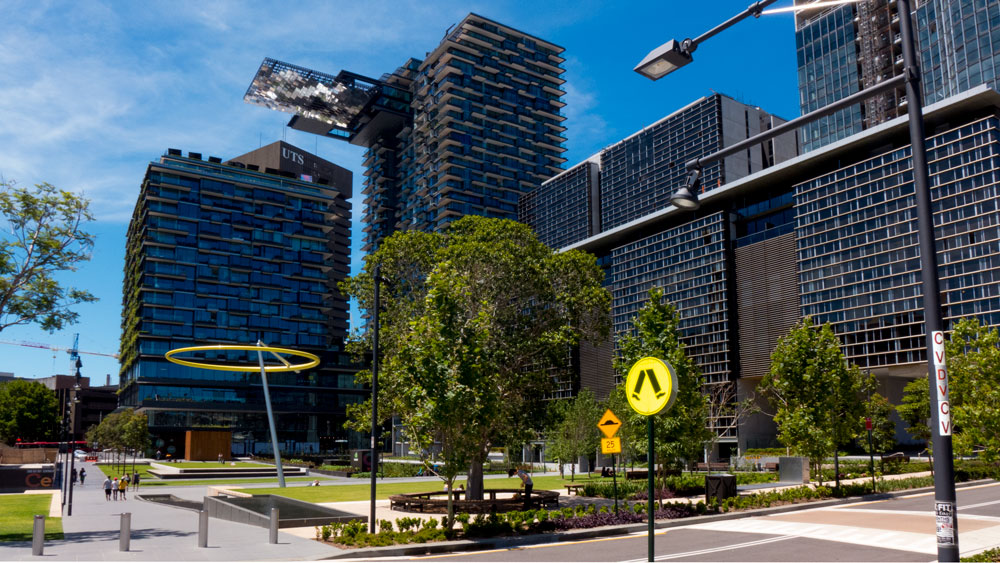
The Central Park development of the old brewery site opposite UTS in Sydney, has attracted much attention in the last couple of years. Most of this was in the form of churnalism, being column space based on using the developer’s media releases. There has also been the expected paragraphs of praise by ‘industry’ experts in profession’s trade magazines.

Continue reading Central Park Sydney

Canberra Urbanity: Marsden Street

An Anniversary

About two years ago, during 2010 – 2011, this quiet residential area in the inner north of Canberra was the battle ground over a very silly proposed redevelopment of two blocks of land.

street-April2013-1

Once the residents had been through the tribunal process, and before the decisions were handed down, the complex chain of events was documented. It is called Do Onto Others.

It is a long read – click here.

Canberra Urbanity

Climate Change adaptation falters in the suburbs

climate-P1020350

Dealing with the complex issues of climate change adaptation should by now have become a priority and part of the everyday for any local government in their oversight of design, planning, development and the re-development of our settlements.

Here in Canberra we have been the subject of a decade or two of pronouncements from newly appointed chief planners on how they are to oversee development that is sustainable and .. lots of other spin that always sounds so sensible!

Continue reading Canberra Urbanity

Climate Change

“It’s time to stop this madness”
Philippines plea at UN climate talks
click on the image above for the speech whereby the Philippines pleads with the world to get out of their ivory towers and to do something about climate change.
Listening were you Rabbott? Oh that’s right, you had important things to do rather than have Australia properly represented at these climate talks.!

Canberra Urbanity

The next Northbourne Avenue

The basics of a proposal for rethinking this important piece of Green Infrastructure

NrthBourne-P1020067The main road into Canberra from the north has been the topic of much debate following the ACT Government’s announcement that it is build a light rail with the route being from Civic to the newer suburbs of Gungahlin. In the wings sits the developer lobby as this transport initiative would provide the final green light for the major intensification of the commercial and residential buildings along the full length of Northbourne Ave

Continue reading Canberra Urbanity

Canberra Urbanity

Anzac Parade: A mixed tale of Trees and Lights

Trees are important in our urban environments. They are part of our urban green infrastructure and perform important roles assisting in health and well-being as well as climate change adaptation.

And they are just beautiful.  I like trees.

Anzac-trees01 Continue reading Canberra Urbanity

Climate Change

Reform failed – so let’s try Revolution

The Australian politicians were called on to address climate change over a decade ago (at least). Local community groups have recognised the need for climate change adaptation and have been frustrated with the lack of meaningful leadership that should be offered by elected officials.

The mainstream press, as led by Murdoch, and the ABC have provided their own biased information on these complex topics. The general public has received mixed messages instead of meaningful and useful information based on the overwhelming scientific evidence.

16RegentsCanal-1100774

Continue reading Climate Change

Canberra Urbanity

Thinking outside that box

originally published Monday, 16 September 2013

Civic was established to be the main metropolitan centre of Canberra. Back in the 1970s and into the 1980s this was the heart of Canberra and had developed its own culture. People would go there to be seen, to meet and to shop. The outer centres were yet to offer the same level of amenity.

The Canberra Centre was a small mall. So most of action was out in the open areas, Petrie Plaza and Garema Place and the spaces along City Walk.

Continue reading Canberra Urbanity

Canberra Urbanity

Are we to be served?

originally published Monday, 9 September 2013

I was having a quiet moment with friends at the Dickson shops last Friday, when we noticed that we were being circled by three senior ACT Planning officials. We recognised two of them as senior planners, the other was the legal combatant from the famous Marsden Steer battle (link to follow).

shops-P1010597We remembered well this guy’s vicious treatment of the residents who were appealing the planning decisions. His way of dealing with the case was best summed up by another resident (a mother) who said, ” now I know where those playground bullies end up!”

Continue reading Canberra Urbanity

Canberra Urbanity

original published November 2010

DESIGNS ON THE FUTURE FOR CANBERRA RESIDENTS

The debate in Canberra, particularly around my own suburb of Dickson, of the future of infill and the need to redevelop our suburbs has now focussed on the dire need to change the way this territory does the business of planning and development. The Canberra community is not fighting to halt development, but is wishing to influence the planning and development decisions to ensure that development delivers on the needs of present and future generations, the young and the elderly, and need to address the full range of human and environmental issues – being housing, health, ecology, transport – and you know the rest. Continue reading Canberra Urbanity

The Art of Trees

Trees

originally published May 2013

If you had not heard, Canberra is celebrating 100 years.  Right now the city is in the advance stages of winter, with all signs being that it will arrive seriously on our leafy door steps this time next week.

This is one of the pleasures of being up here on this hinterland and in the middle of the countryside where someone about 100 years ago thought it wise the plonk the national capital. Because of the location, we get to experience the full gamut of the changing seasons. And right now it is getting cold. Continue reading The Art of Trees

Canberra Urbanity

Are we being served?

Originally published January 2011

Christmas meanderings through Canberra inner north suburbs was a very pleasant way of exercising. The streets were very quiet and the weather very accommodating for these excursions. It was also a timely chance to observe the local levels of commitment to dealing with climate change. It seems every other street in inner Canberra has some form of house being rebuilt or refurbished. But the real attention within the local communities has been on proposals for knocking down adjoining homes and their replacement with multiple units. Continue reading Canberra Urbanity

Canberra Urbanity

Views from the front veranda

originally published December 2010

There’s something very peaceful about returning to this suburban street after working interstate for too long and too often. Here we sit amongst the intense greenery of Dickson, the rush of breezes amongst the lush trees with the occasional squawk or chirping of birds. Layered on this filters in the voices and music of the three young renters next door, the sounds of the baby from the newly arrived couple across to the left, the chatter of the seven-year old with her parents heading out on bikes, the sound of students coming and going down the road, and of course, a dog or two (as there always seems to be around here). Maybe soon this will be joined by the sound of one of the immediate neighbours and their teenage children enjoying dinner outside tonight. A diverse mixture in such a small part of Dickson. And this is what the ACT Planning Minister sees as a threat! Continue reading Canberra Urbanity