Reviewing The Saturday Paper’s
review of Definitive Dupain at the State Library NSW
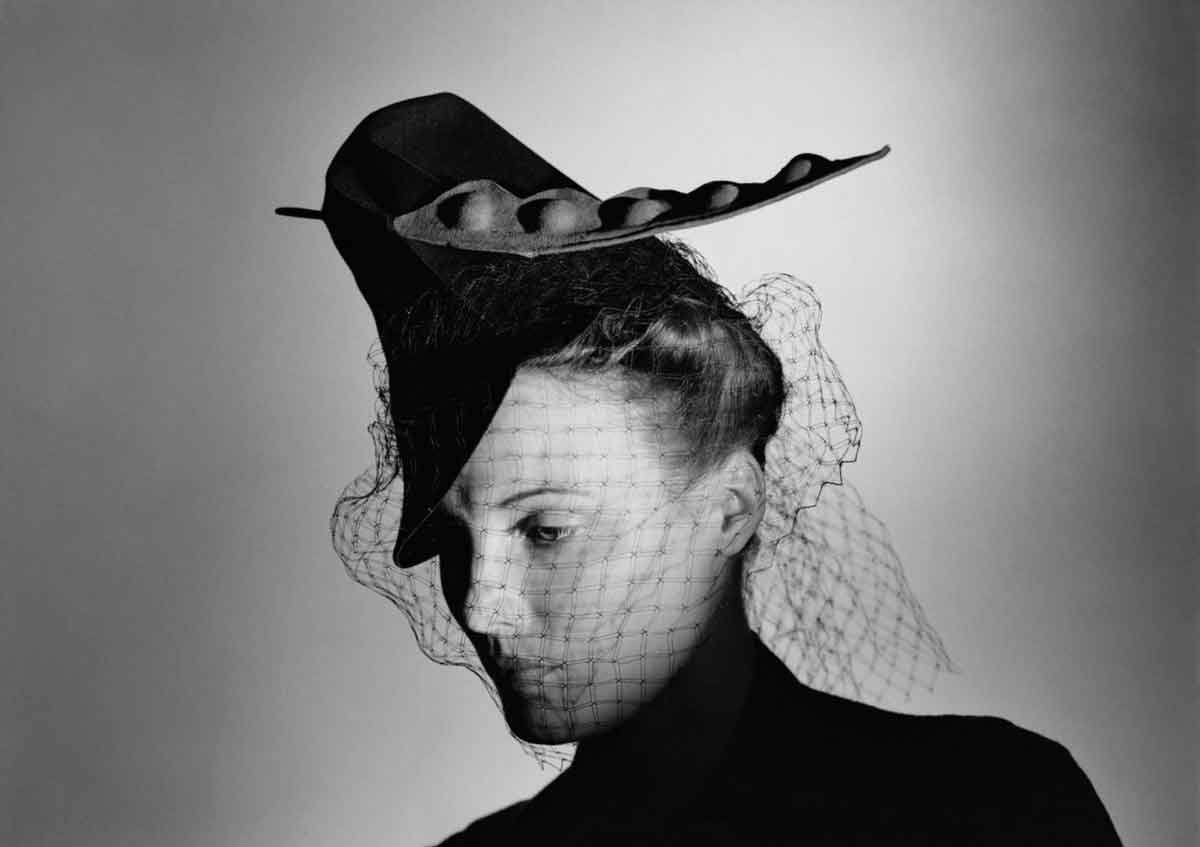
Definitive Dupain at the State Library of New South Wales is the first retrospective drawn from the Library’s Dupain archive. The exhibition is of two hundred photographs, free entry and it runs for a year – 24 August 2026 to 18 July 2027
Mireille Juchau’s review of it in The Saturday Paper 12th September 2026 is a curious piece of work. The argument she builds is not an argument about the exhibition the State Library has mounted. It is an argument for a different exhibition, and that exhibition was held by the same institution nine years ago and went on tour.
I am grateful for one important fact: this is not a media-release review. She observed the cameras and the handmade dodging tool in the case, the plastic rain scarves on the bus to Kurnell, and a caption on an inside page of a small handmade book Dupain made for Damien Parer. We are grateful that a media organisation has someone visit the exhibition to review this photography exhibition – especially as there are so few reviewers regularly writing about photography in this country.
Which makes what follows the more puzzling.
The review is headed with a question: why a Max Dupain exhibition, and why now. The question is put three times but it is not answered by the reviewer.
The answer is on the first screen of the Library’s own website. The State Library acquired the Max Dupain & Associates archive in 2011 and the exhibition negatives in 2016. What it holds now runs to more than 250,000 commercial and personal negatives and prints spanning a sixty-year working life. This is the first retrospective that could be attempted with both halves of that material under one roof. The curator, Avryl Whitnall, spent five years going through it.
Whitnall’s previous Dupain exhibition at the Library was Max Dupain — Modernist in 2007. Anyone who was a child when that show hung is now in their thirties. The audience for a survey renews itself whether or not the scholarship does. There is a new audience available for this new survey exhibition.
A public institution that acquires a major archive acquires with it an obligation to show what is in it. This is a condition of custodianship, and it is why state collections exist. So the answer to why now is obvious: because the material is finally all in one place, because the work of going through it is finally done, and because those who saw the earlier surveys are now joined by a generation that has never had the chance to see two hundred Dupains on a wall.
A central theme of the review is that the Library should have set Dupain in dialogue with the photographers and artists who built on or departed from his vision. Tracey Moffatt’s portrait of David Gulpilil at Bondi is offered, and Anne Zahalka’s restaging of the Sunbaker, and Abdul Abdullah on the Cronulla riots, and Julie Rrap against the idealising male eye.
That exhibition happened. It was called Under the Sun: Reimagining Max Dupain’s Sunbaker, it was an Australian Centre for Photography project, and it was shown at the State Library of New South Wales from 18 February to 17 April 2017 before travelling to Monash Gallery of Art from 6 May to 6 August.
The other half of her proposal has also had its own show. Man Ray and Max Dupain was at Heide Museum of Modern Art last year: the dialogue with predecessors, given a full exhibition rather than a grid of six comparisons.
Showing what formed a photographer is part of telling that photographer’s story. The grid of six early Dupains set against six European images explains how he came to see as he did: what he read, what he borrowed, what he absorbed and then shed. Showing who reacted to him afterwards is reception history. In that story Dupain figures not as the subject but as the cause, and the subject is photographers such as Zahalka, Moffatt and Rrap. That is a good exhibition, an interesting one, a different one, and it was mounted in 2017.
The masculinity question Juchau raises in her closing paragraph, through William Yang, and frames as a question the exhibition has ducked, is the organising theme of Helen Ennis’s biography of Dupain, the book she quotes from.
The Library’s account of its own show is a claim about range: from Sunbaker to studio portraiture, experimental photography, architecture, advertising, fashion, wartime work, nature and intimate personal photographs. Almost 200 images, many of them prints Dupain selected himself for magazine and book publishers.
This reviewer made no mention the architectural photography, nor the advertising, nor the fashion, nor the industrial work, nor the wartime photographs, nor the nature studies. That is the majority of the exhibition.
The quarter of the show she does review is the quarter that sustains the reading she brought in with her. The Seidler buildings, the camouflage work, the aluminium pots and the toothpaste offer nothing to an argument about the beach and the male eye, and so they are not mentioned.
There is a question here that she was well placed to ask and did not: whether two hundred images drawn from a quarter of a million fairly represent a sixty-year career, most of it spent on commission for clients. That is the fairest possible test of the Library’s own word, definitive, and the evidence for it was hanging on the walls in front of her.
On an inside page of that handmade book she found a caption whose language points to Dupain’s photographs from Papua New Guinea, which the exhibition does not include. But, that what curator do – chose what is in – and what is out for another time.
There are obvious questions about the reviewer’s visit to the exhibition. The first of them is whether she enjoyed it. It is hard to tell. Her review reads as though she was too busy with her serious predetermined questions to do what you do when strolling around a well curated and thought-through exhibition: take your time and enjoy great Australian photography.
A quarter of a million negatives have come into public hands. Five years have been spent finding out what is in them. The public has not yet seen the result. That is why a Max Dupain exhibition, and that is why now. The answer was never hard to find. It only had to be looked for within this wonderful exhibition where the reviewer asked the question.
Some sources
- State Library of New South Wales, Definitive Dupain, exhibition page (24 August 2026 – 18 July 2027), sl.nsw.gov.au.
- Mireille Juchau, ‘Why a Max Dupain exhibition and why now?’, The Saturday Paper 13th Sept 2026.
- Australian Centre for Photography, Under the Sun: Reimagining Max Dupain’s Sunbaker, State Library of New South Wales, 18 February – 17 April 2017; Monash Gallery of Art, 6 May – 6 August 2017.
- Heide Museum of Modern Art, Man Ray and Max Dupain, 2025.
- Helen Ennis, Max Dupain: A Portrait, 2024.
- photo-web.com.au/dupain Max Dupain resource page — essays by Gael Newton AM and a consolidated bibliography of Dupain scholarship and exhibitions.
<iframe src=”https://www.facebook.com/plugins/post.php?href=https%3A%2F%2Fwww.facebook.com%2Fmaxdupainphotography%2Fposts%2Fpfbid0VnUQUBkTv1xdaUnYfjVvqwc6qub22qBiWDfwsXDCb64xPrNYg4vx8QqSCcNWZGhDl&show_text=true&width=500″ width=”500″ height=”716″ style=”border:none;overflow:hidden” scrolling=”no” frameborder=”0″ allowfullscreen=”true” allow=”autoplay; clipboard-write; encrypted-media; picture-in-picture; web-share”></iframe>