exhibition at Ivanhoe Council Gallery, Gallery 275
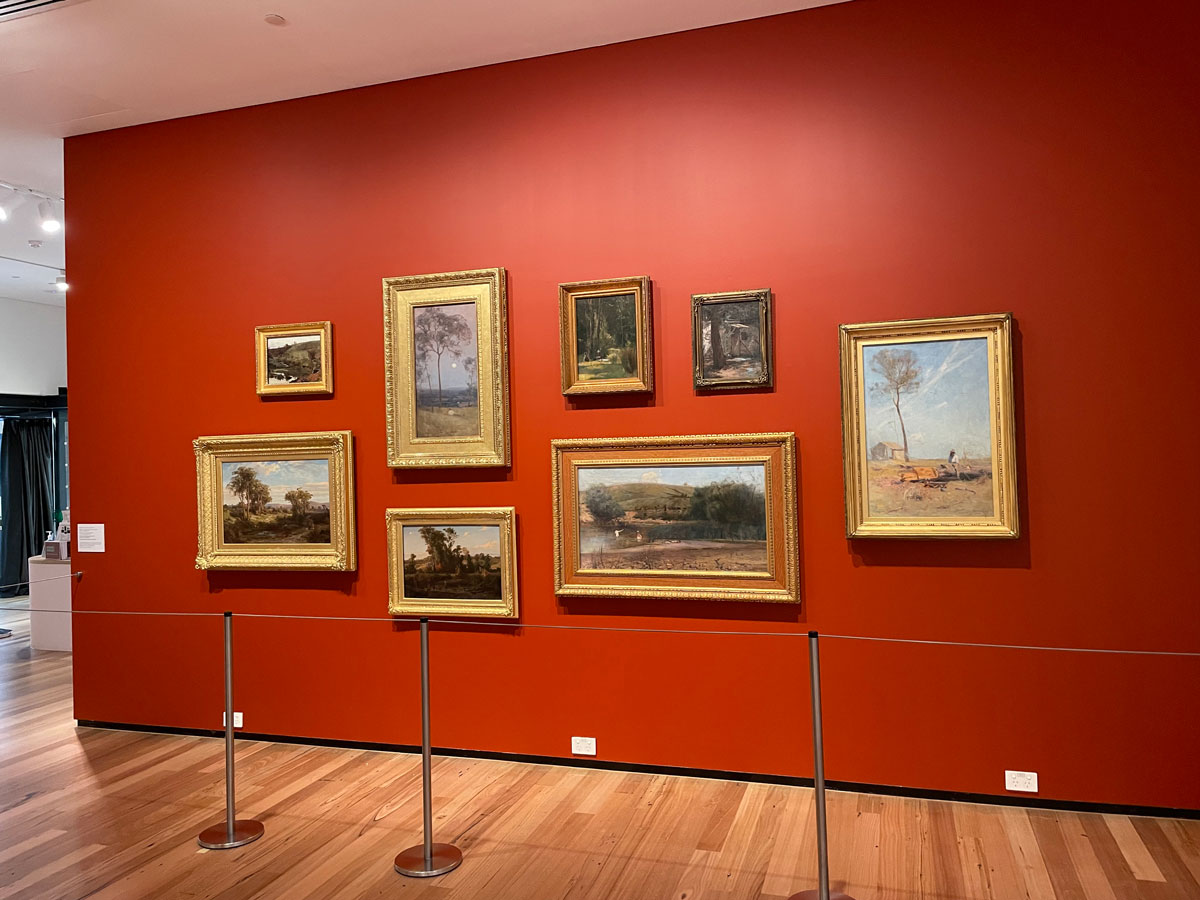
Last year Gallery 275 launched an exhibition of eight Heidelberg School paintings, borrowed from the National Gallery of Australia (Canberra). The gallery is the Banyule Council gallery in the Ivanhoe library and cultural hub – in Melbourne. The eights works were generously spaced around the walls.
It was great to see the works again – even though they had trouble filling this reasonably sized gallery space. The works are now grouped together on one wall. (image above)
This is probably how paintings would have been exhibited in their time – hung closely together. They look much better. There are no labels; there’s a room brochure at the front desk for this purpose. Many contemporary curators do not like labels messing up the display. (the label to the left is a warning about keeping your distance)
The reason the works had been moved together to one wall is to allow for the rest of the space to be used for a contemporary exhibition that is ‘to enter into a critical dialogue with this treasured heritage’. In this case that artist is Jill Orr. To quote:
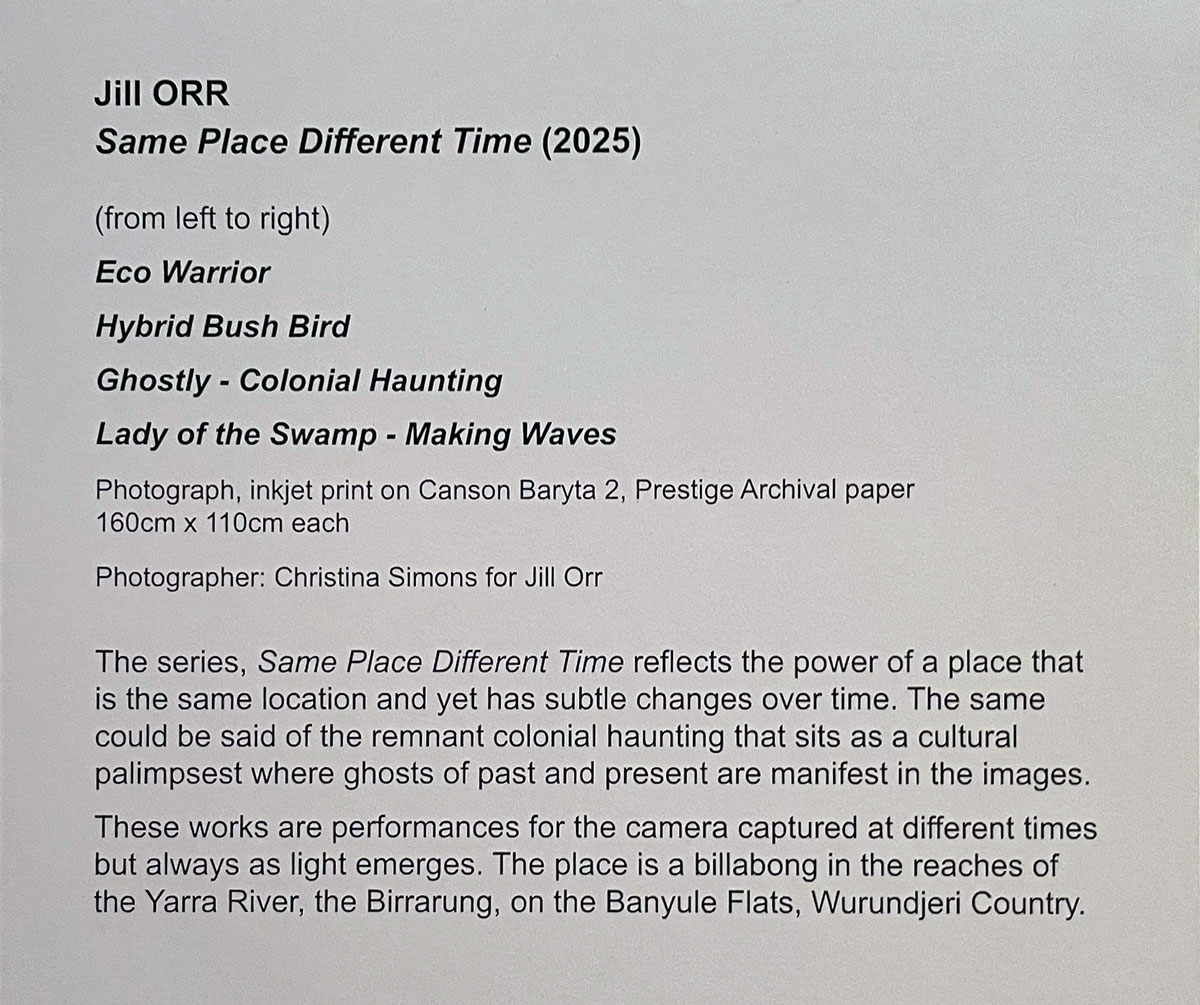
Whose Paradise? by Jill Orr presents a meditation on the idea of progress, weaving contemporary vision into the fabric of history. Her photographs are placed in conversation with Heidelberg School paintings (also on display), creating a layered narrative where past ideals and current interests converge.
The colonial occupation of Australia gave opportunities to millions of people in the hope of a ‘promised land’. However, by contrast, First Nations peoples and places continue to experience the consequences.
The establishment of Australia could be seen through the lens of progress at all costs. This lens is a construction that cannot describe what that lies outside that narrow frame, just as the camera only sees the point of focus and the surrounds remain unseen.
The exhibition is consists of an edited version of her exhibition in mid 2025 in Fitzroy. In addition there is the wooden structure that first featured in 2012 exhibitions and again where I saw it in St Kilda in early 2024.
Looking at the Jill Orr works it was obvious that something serious was being betrayed through the actions of the artist. It took a couple of reads of the curator speak on the labels to gain some insight to the artist’s current stated intention. I came to the conclusion that despite the words presented, there was minimal relationship between Jill Orr’s and the Heidelberg School paintings.
I have known of Jill Orr’s work for decades. Always someone of interest and she has received a lot of positive accolades from the art world, but….
I am not the biggest fan of performance art and the photos that result from performances. If a performance artist produces photographic artworks that stand alone as good photographs – that that can be a different matter.
So what is Jill Orr’s work about – to quote from her own biography:
Jill Orr’s work centres on the psycho-social and environmental where she draws on land and identities as they are shaped in, on and with the environment be it country or urban locales. Orr grapples with the balance and discord that exists at the heart of relations between the human spirit, art and nature. Orr is a performance artist crossing between performances for live audiences and performances for the camera. She has produced iconic images reflecting an Australian perspective.
Research interests: Space, Place and Recurring History are areas through which practice led research enables, articulates and deepens relations to places that have been impacted through colonization, cultural, social, historical and environmental forces.
Site specific works give voice to places, spaces and environments as living entities through which human and non-human interactivity are central in grounded artistic responses. Jill Orr places emphasis on the artistic imaginary which, when in constant focus, enables visualisation of the past, present and future as fluid and porous over time. Her interest in an empathetic and poetic performativity that can sustainably compliment interdisciplinary work through expanded artistic fields, is constantly evolving.
Some context for my doubts: I have been observing performance art, video art and related stuff since the mid 1980s. Since then the attached messages from the artists have become a little less personal and more political and in some cases convoluted and opportunistic.
Despite the changes in messaging and curatorial speak, essentially over the decades the style and content of a lot of performance and associated photographic documentation has not changed that much.
People stand on things, run around landscapes or industrial sites, maybe in and out of water and sometimes covered in materials of various types – sometimes partly or fully naked. For whatever reason, I have largely remained cool about these performances. And I have seen a lot of them – but that penny has not dropped.
I suspect the spiritualists around the early 1900s started a lot of this style of theatrical performance, moving around, covered up and dancing around stuff. This was followed by the avant-garde movements through to the 1930s.
An AI search: Early 20th-century spiritual artists who engaged with, depicted, or incorporated dance into their work often sought to visualize the “inner life,” unseen vibrations, and the movement of the soul. This era saw a deep connection between abstract art, mystical movements like Theosophy, and the liberation of the body through dance.
The difference now is that the performances are now more likely to be under the banner of making statements about contemporary political and social issues.
So when I looked at Jill Orr’s work, and before reading any of the attached narratives, what I saw was more of the same. I intend to revisit the gallery to see if I see anything differently.
Meanwhile, here’s a few images:
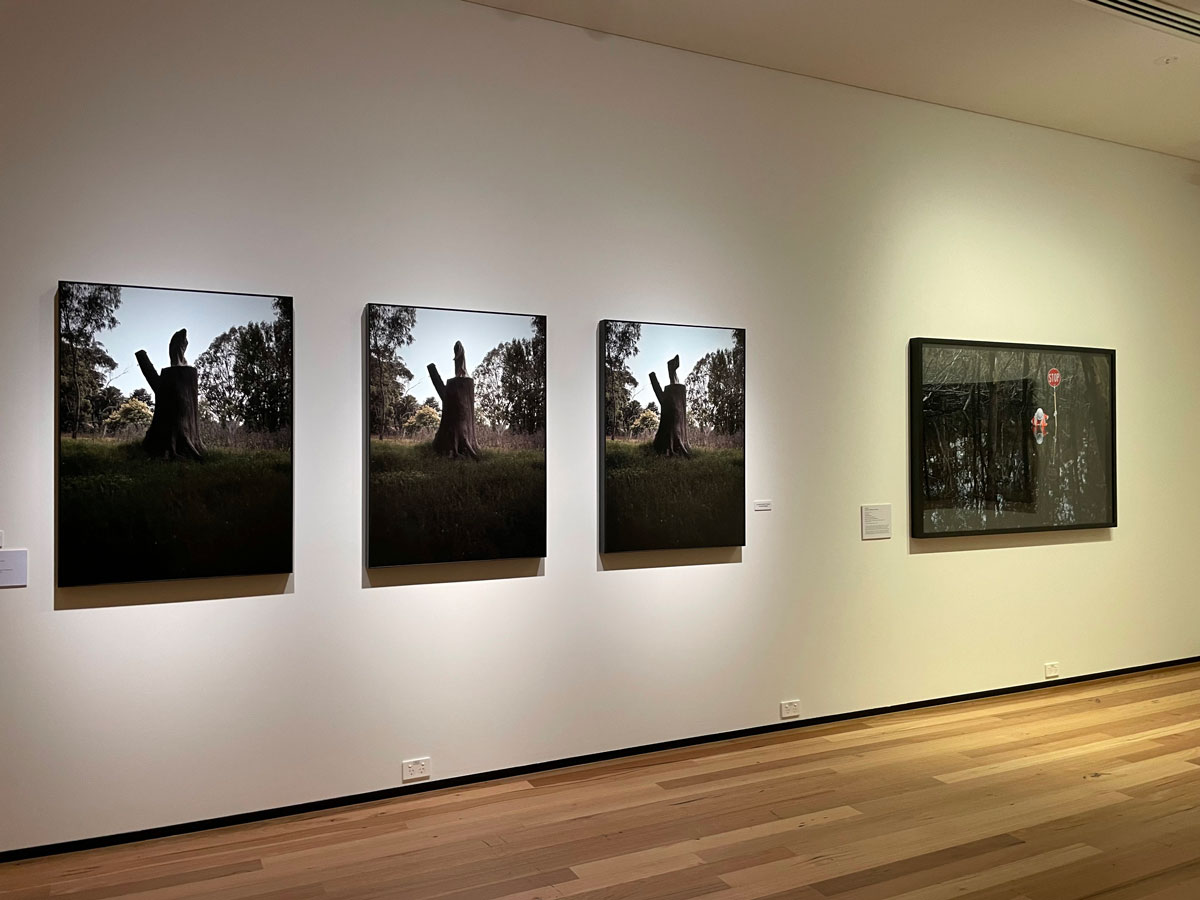
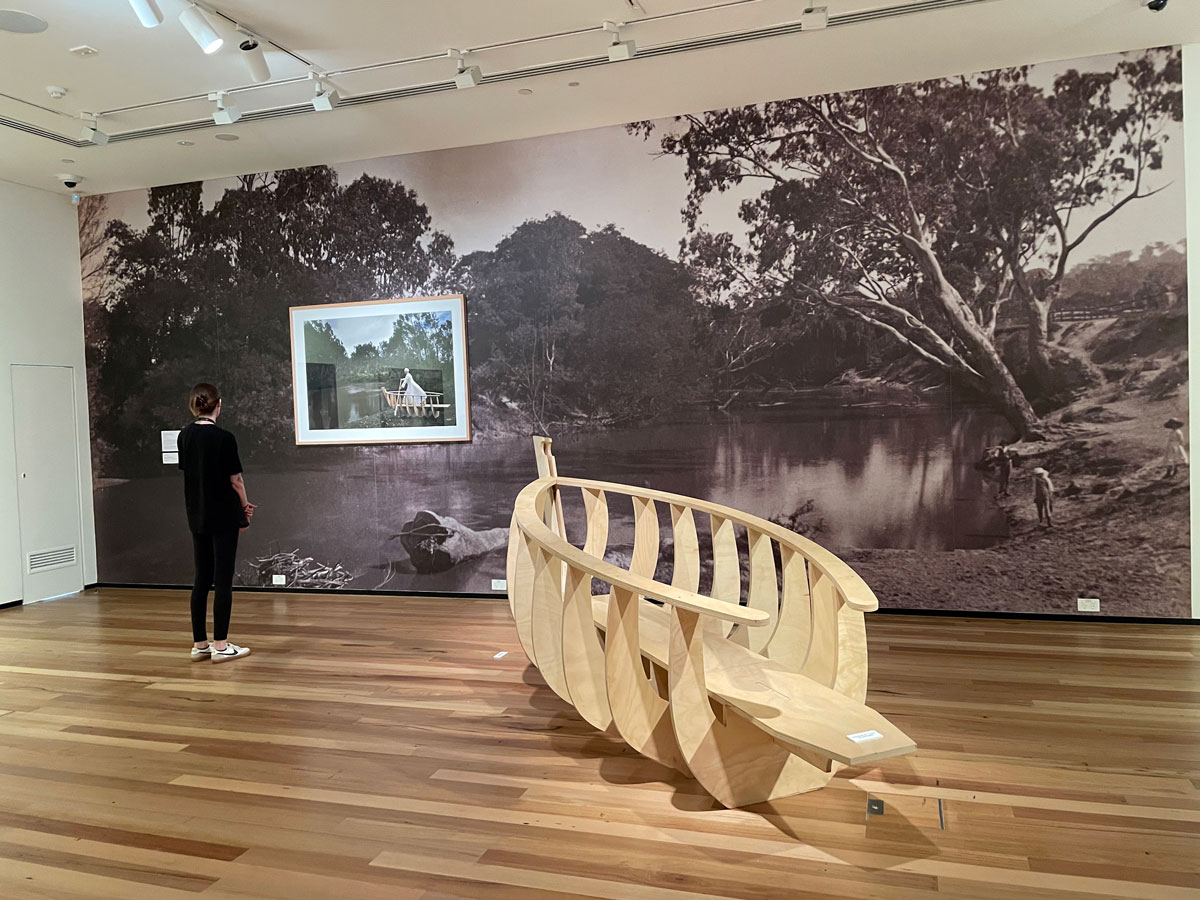
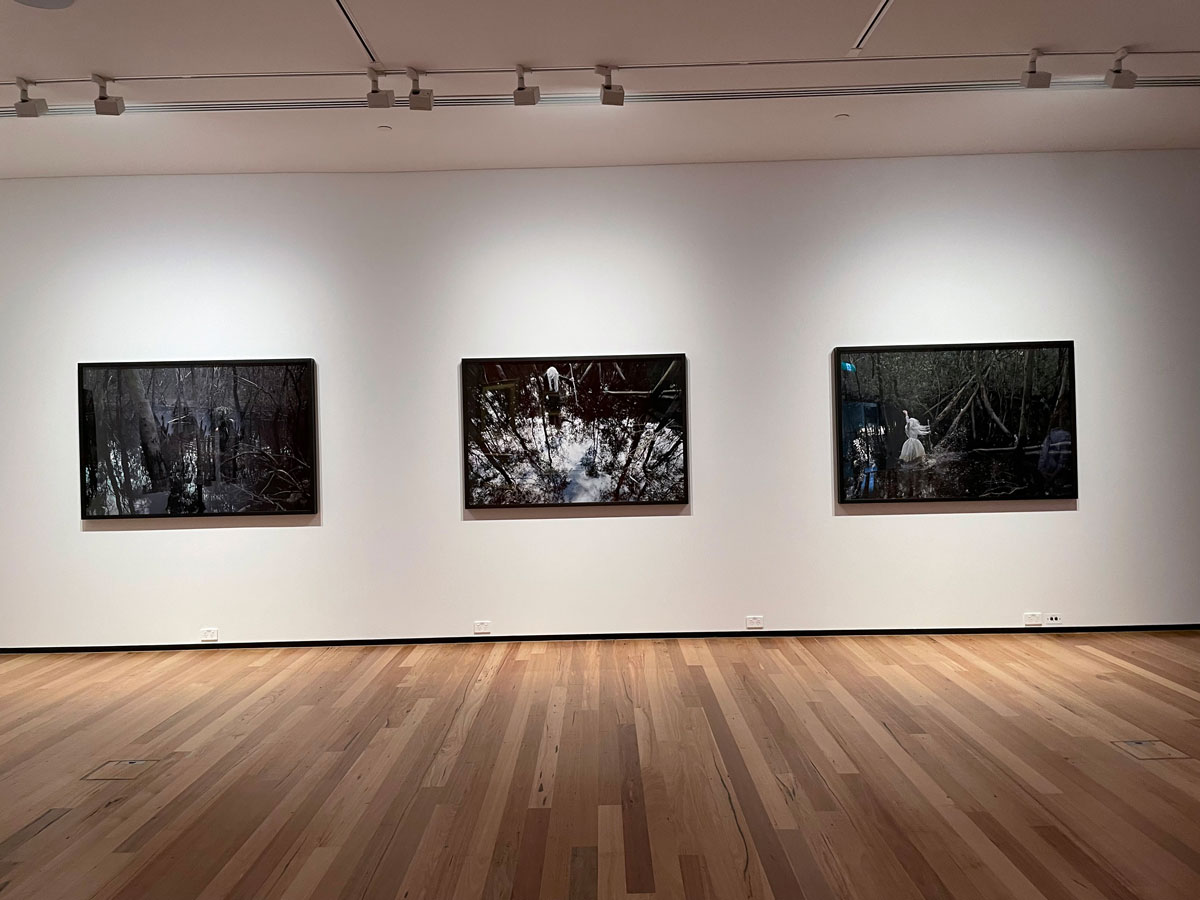
One of my personal tests with exhibition is to imagine that if I could, which works would I take away with me. And also would I recommend the exhibition to someone who had to travel across town to see it; of even interstate?
On the first, there’s one of the small Heidelberg paintings I could treasure. There was no Jill Orr work that had that sort of appeal.
If you were local, I would suggest dropping by to have a look; but I would not suggest to most to travel too far just to see this exhibition, unless you were in the area for another reason – and if so, please do have a look.
here’s the council gallery’s listing
and Jill Orr’s academic listing
and Jill Orr’s web site; with loads of her work online
and, Jill Orr’s is represented through this gallery – more work to be seen online